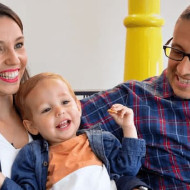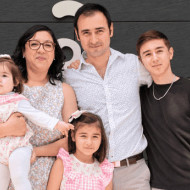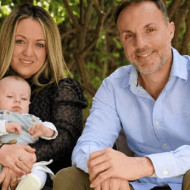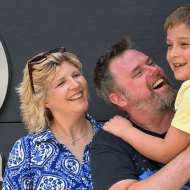
Active involvement of both partners
Each partner plays a role in the treatment, either by providing the eggs or carrying the pregnancy.
Rigorous sperm donor selection
The medical team selects an anonymous sperm donor and carries out phenotypic matching.
Legal recognition of both mothers from birth
With the appropriate consent and legal procedures, both of you can be legally recognised as mothers.

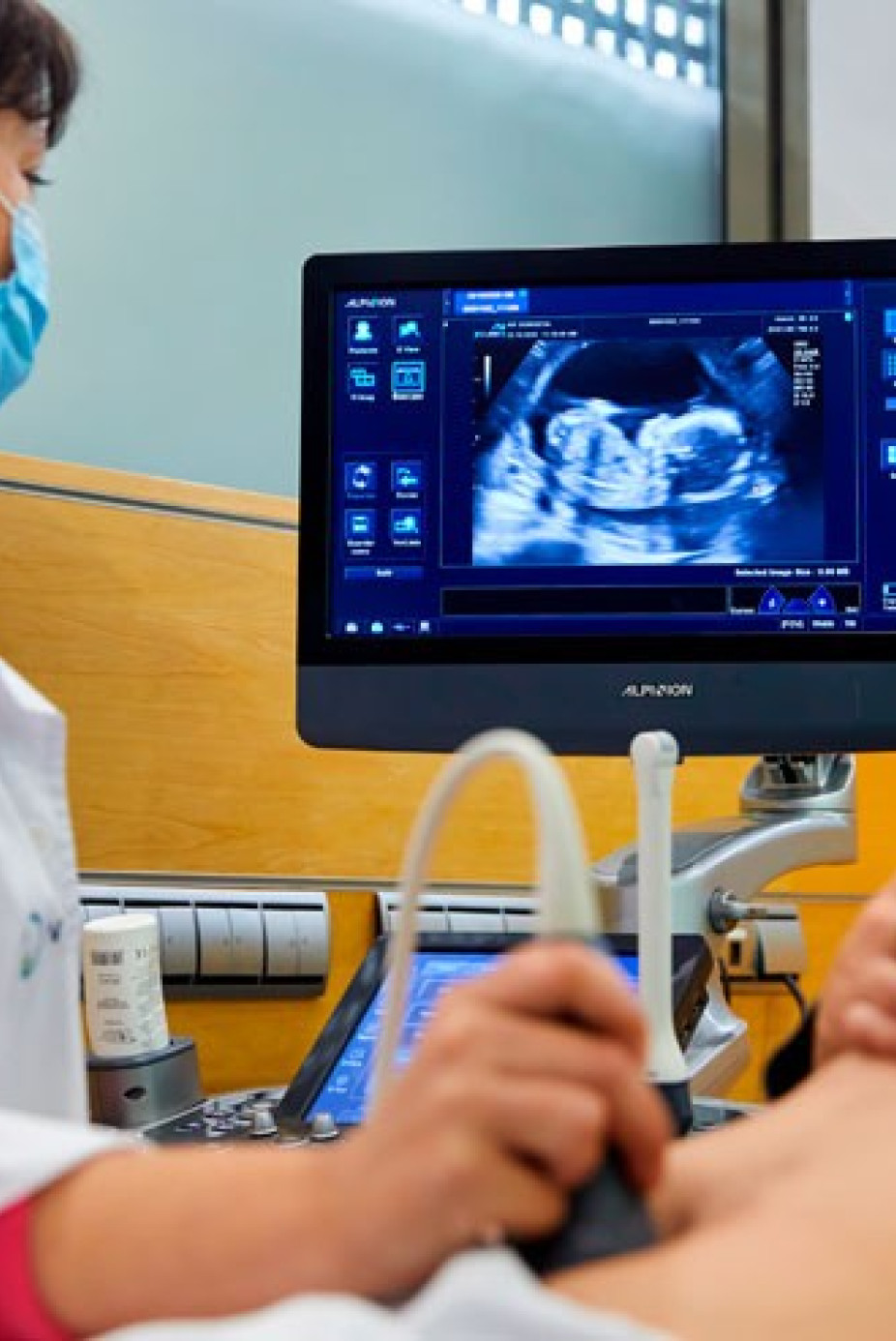
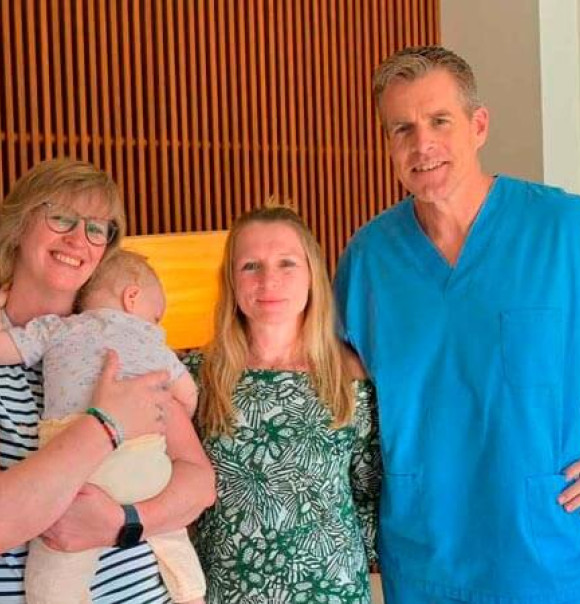
Reciprocal IVF, also known as the ROPA method, is an assisted reproduction treatment that allows female couples to share motherhood. In this process, one partner provides the eggs while the other carries the pregnancy, allowing both women to participate biologically in the conception of their baby.
This technique is based on in vitro fertilisation (IVF) using donor sperm and is one of the most popular options for female couples or single women who wish to become mothers through assisted reproduction.
The ROPA Method allows you to share motherhood right from the start: one partner provides the eggs and the other carries the pregnancy. At IVF-Life, we tailor your treatment to your medical needs and your plans for starting a family.
You will make this decision together with your medical team, taking account of your preferences, medical histories and fertility assessments. These findings help us recommend the arrangement most likely to support successful treatment and a safe pregnancy.

The partner providing the eggs contributes her genetic material to the embryo, alongside that of the sperm donor. Age and ovarian reserve are particularly important considerations. Ovarian reserve can be assessed through tests such as anti-Müllerian hormone (AMH) levels and an ultrasound antral follicle count.
Ovarian reserve helps predict the response to stimulation, while age is an important factor in egg quality. However, no test can guarantee embryo quality.

The gestational mother receives the embryo and carries the pregnancy. Her general health, medical history, uterus and endometrium are assessed through a gynaecological examination and ultrasound scan.
Where clinically indicated, further tests may be recommended to assess the uterine cavity and plan preparation of the endometrium.
The partner providing the eggs contributes her genetic material to the embryo, alongside that of the sperm donor. Age and ovarian reserve are particularly important considerations. Ovarian reserve can be assessed through tests such as anti-Müllerian hormone (AMH) levels and an ultrasound antral follicle count.
Ovarian reserve helps predict the response to stimulation, while age is an important factor in egg quality. However, no test can guarantee embryo quality.
The gestational mother receives the embryo and carries the pregnancy. Her general health, medical history, uterus and endometrium are assessed through a gynaecological examination and ultrasound scan.
Where clinically indicated, further tests may be recommended to assess the uterine cavity and plan preparation of the endometrium.
The partner carrying the pregnancy forms a biological connection with the baby through implantation and pregnancy. Epigenetics is the study of mechanisms that regulate gene activity without changing the DNA sequence.Research into communication between the endometrium and embryo suggests that molecules in uterine fluid, including certain microRNAs, may play a role in regulating gene expression before implantation.
These findings do not mean that the gestational mother passes on her DNA, nor can they predict the baby's physical appearance. The maternal environment also influences the baby's development throughout pregnancy.
TREATMENTS
The ROPA method or reciprocal IVF uses sperm from an anonymous donor selected by our medical team. Spanish law protects the donor's identity, subject to exceptional circumstances set out in legislation. Sperm donation does not establish any legal parent-child relationship between the donor and the baby.
One of the women in the couple will undergo ovarian stimulation and egg collection. The eggs will then be fertilised using donor sperm, and the resulting embryo will be transferred to the partner who will carry the pregnancy.
At IVF-Life, our goal is to make our patients' dreams come true. To achieve this, we perform a comprehensive medical study to determine the most appropriate assisted reproduction technique for each case.

PROCEDURE


The ROPA Method involves several stages, from ovarian stimulation and egg collection for one partner to fertilisation and embryo culture in the laboratory, followed by the transfer of an embryo into the other partner's uterus. Each stage is tailored to the reproductive health and needs of both patients.

Treatment begins with ovarian stimulation for the partner providing the eggs. The aim is to obtain mature eggs for fertilisation, with medication tailored to each patient's ovarian reserve and response.
The stimulation lasts between 8 and 14 days, during which ultrasound scans and blood tests are carried out to check that the patient is responding appropriately to the prescribed medication. Thanks to the medication, the patient's follicles grow progressively until they reach the optimal size for egg collection.
When the follicles are of optimal size,egg collection (follicular aspiration) is scheduled and performed under vaginal ultrasound guidance. The procedure is performed in the operating theatre under light sedation, so that the patient does not feel any discomfort. A few hours after the operation, the patient is able to resume her normal daily activities.
During this process, the sperm with the highest fertilisation potential are selected.
At IVF-Life, the fertilisation of the eggs during IVF treatment is carried out in our state-of-the-art laboratory following the guidelines of our team of embryologists, highly experienced professionals.
The laboratory plays a vital role in treatment, alongside the quality of the eggs and sperm and the clinical circumstances of both partners. At IVF-Life, we use advanced technology to monitor embryo development and help identify those with the greatest potential to implant.
The embryos are monitored in incubators with optimal conditions until embryo transfer. This information is vital for selecting the embryo with the highest implantation potential.
At IVF-Life we understand the importance of our patients knowing what is happening during their treatment. We therefore establish constant communication, and they are always informed about the development of their embryos and the steps to be taken during their treatment.
The embryo transfer is a very special moment for patients because it is the first contact with their embryo after starting treatment. It is a quick and painless process in which the doctor inserts a cannula to deposit the embryo into the patient's uterus. It is performed under ultrasound guidance.
The medical team, together with the patient, will decide how many embryos will be transferred and, where applicable, how many will be thawed on the day of the embryo transfer. Although the Spanish Fertility Society (SEF) limits the maximum number of embryos per transfer to three, thanks to our technology, we recommend transferring just one embryo. This helps to reduce the risks associated with multiple pregnancy.
Following embryo transfer as part of the ROPA method, you may have questions about the symptoms or changes that can occur in the days afterwards. Find out more about implantation bleeding and how to recognise it.
Approximately twelve days after the embryo transfer, a blood test will be performed to measure beta-hCG levels and determine whether pregnancy has occurred.
After confirming the pregnancy with the beta-hCG test, an ultrasound scan will be performed to check that the pregnancy is progressing as expected.
Any viable embryos that are not transferred can be vitrified for future use, potentially avoiding another round of ovarian stimulation and egg collection. Vitrification takes place at the appropriate stage of treatment; there is no need to wait for the pregnancy scan.
The cost of the ROPA Method depends on your treatment plan and the medical needs of both partners. At IVF-Life, we provide a personalised quotation setting out what is included and any additional services you may need.
Stimulation and monitoring: a tailored medication plan, medical care, an initial ultrasound scan, and ultrasound and hormone monitoring for both partners. Medication is not included.
At IVF-Life, patients must be married to undergo the ROPA Method. This requirement applies when one partner's eggs are used by the other as part of their shared plans for a family, which is distinct from anonymous egg donation.
Both patients must be adults, receive the relevant medical information and sign the informed consent forms. Before treatment begins, our team will check your documents and proof of marriage. The sperm donor remains anonymous under Spanish law.
Under Article 7.3 of Spanish Law 14/2006, the wife of the woman giving birth, provided the couple are not legally or de facto separated, may consent to being recognised as a legal parent of the child. With the necessary consent and registration, both women can be legally recognised as mothers from birth without adoption. Legal parentage requires the appropriate Civil Registry procedures; it is not established simply by undergoing treatment.
The marriage requirement for this treatment should be distinguished from the general rules governing legal parentage. Following the 2023 reform, Spain's Civil Code also provides for the recognition of a non-gestational parent outside marriage. If you live outside Spain, you should also check the recognition and registration requirements in your home country.

FIND ANSWERS TO YOUR QUESTIONS
The decision about who will provide the eggs and who will carry the pregnancy is up to the couple, although the medical team's assessment should also be taken into account.
In Spain, access to reciprocal IVF and the legal recognition of both mothers depend on the applicable assisted reproduction, consent and civil registration requirements. Marriage is not presented as a universal clinical requirement for undergoing treatment. Because individual and cross-border circumstances may differ, patients should obtain specific legal and clinical guidance before starting treatment.
At IVF-Life, we understand that each case is different, which is why the most suitable ROPA method treatment for you will be determined after a personalised medical evaluation. Our team of experts will analyse your situation in detail to recommend the best option, always with an honest and transparent approach.
Once the study is completed, we will provide you with a detailed cost estimate for the ROPA method so that you have all the information before making a decision.
Treatment usually takes between one and two months, although the timetable depends on the initial assessment, ovarian response and preparation of the endometrium. It may take longer if embryo transfer is postponed or additional tests or procedures are needed.
Ovarian stimulation generally lasts 8–14 days, followed by around five or six days of embryo culture to reach the blastocyst stage. After embryo transfer, you will have a pregnancy blood test at the time recommended by your medical team.
Before starting ovarian stimulation, it is necessary to check parameters such as ovarian reserve or the presence of infections, usually via blood tests.
A transvaginal ultrasound is also recommended to assess the health of the ovaries and uterus, along with a gynaecological evaluation to ensure there are no conditions that could interfere with ovarian stimulation or egg collection.
This is a personal decision, made with advice from our fertility specialists. We consider both partners' preferences, the age and ovarian reserve of the partner providing the eggs, and the general and uterine health of the partner carrying the pregnancy.
Ovarian health is primarily relevant when deciding who should provide the eggs, while the ability to carry a pregnancy is assessed through uterine health and overall wellbeing. We consider these factors separately to recommend the most suitable arrangement.
In Spain, both partners can be legally recognised as mothers from birth, without adoption, provided the necessary consent and Civil Registry requirements are met. Providing the eggs and carrying the pregnancy describe each partner's biological role; legal parentage determines their legal relationship with the child.
If you live in another country, it is worth checking the requirements for recognising both mothers as legal parents before starting treatment, as these may differ from those in Spain.
PATIENTS

Female couples who would like both partners to be biologically involved in their journey towards parenthood, provided their medical assessments indicate that treatment is suitable.
Where one partner has a condition affecting the fallopian tubes, IVF may be recommended depending on the couple's clinical circumstances.
For women with irregular periods, ovulation problems need to be assessed individually to determine the most suitable treatment.
In cases of endometriosis, it's possible effects on ovarian reserve and pregnancy are assessed before deciding which partner will take each role.
The treatment is recommended for women who have been unsuccessful in previous attempts at artificial insemination.
The ROPA method is also recommended when there is a risk of transmitting genetic or chromosomal abnormalities to the child.
WHAT OUR PATIENTS SAY
Privacy Policy
IVF-LIFE, hereby informs you of its privacy policy applied to personal data. The use of the website does not imply that the user must provide any information regarding their identity, and cannot be associated with a specific user by the company. In the event that personal data is provided, this data will be collected and used in accordance with the limitations and rights set out in the aforementioned regulation.
WHO IS RESPONSIBLE FOR THE PROCESSING OF YOUR DATA?
DATA CONTROLLER: IVF SPAIN ALICANTE S.L.U (hereinafter IVF-Life)
CIF: B-54973227
Postal Address: Avenida de Ansaldo, no. 13, 03540, Alicante (Alicante)
Contact with the Data Protection Officer: dpo@ivf-life-group.com
DATA CONTROLLER: Instituto Vasco de Fertilidad (hereinafter IVF-Life)
CIF: B95575874
Postal Address: Avenida de Tolosa, 71-73, 20018 Donostia / San Sebastián (Spain)
Contact with the Data Protection Officer: dpo@ivf-life-group.com
DATA CONTROLLER: IVF Spain Madrid (hereinafter IVF-Life)
CIF: B 85138113
Postal Address: C/ de Manuel de Falla, 6-8, 28036 Madrid (Spain)
Contact with the Data Protection Officer: dpo@ivf-life-group.com
WHAT TYPE OF DATA DO WE PROCESS?
Depending on the products, services, or functionalities that you wish to enjoy, we may need to process different types of data. In general, this data will be, depending on the case, the following:
- Your identification data: for example: name, surname, language, country from which you interact with us, contact details, etc.
- Connection, geolocation and navigation data.
- Commercial information if you are subscribed to our newsletter.
- Data about your tastes and preferences.
WHAT IS THE ORIGIN OF THE DATA?
The use of certain services or requests addressed to IVF-LIFE are subject to the prior completion of the corresponding form. All the information provided by the User through the forms on the Portal for the above purposes or any other must be truthful.
To this end, the User guarantees the authenticity of all the data provided and will keep the information provided to IVF-LIFE perfectly up to date so that it corresponds at all times to the User's real situation. In any case, the User will be solely responsible for any false or inaccurate statements made and for any damage caused to IVF-LIFE or third parties because of the information provided.
By clicking on the "send" button on the corresponding form, the User expressly consents to his/her data being used to send professional communications about his/her query by e-mail or by any other means.
However, the User may revoke the consent given and oppose the sending of such communications in each of the communications received or by sending them to the address indicated in this legal notice and enabled for this purpose. Likewise, in each of the communications sent, the procedure for opposing the sending of new professional communications shall be expressly indicated.
Users who provide personal data of other natural persons are obliged to comply, in relation to said data, with all obligations deriving from the data protection regulations in force, and in particular the duty to inform and obtain the consent of the owner of the personal data.
When we request your personal data to provide access to certain website functionalities, we will mark the required fields to ensure the service can be delivered.
Please note that if you choose not to provide us with this data, you may not be able to complete your registration as a user or you may not be able to enjoy those services or functionalities.
For the processing of data, IVF-LIFE adopts the security levels required by current European and national legislation on the Protection of Personal Data. Notwithstanding the above, technical security in a medium such as the Internet is not impregnable and there may be leaks due to the malicious actions of third parties.
Our services are aimed at people of legal age, in the event that some of our services are specifically aimed at minors, IVF-LIFE will request the consent of parents or guardians for the collection of personal data or, where appropriate, for the automated processing of data as set out in current legislation. If the User is a minor, they are required to have the prior consent of their parents or guardians before proceeding to the inclusion of their personal data in the forms on the Website.
Initially, your personal data are provided directly by you, but in certain cases they may originate from centres, referring doctors and public health systems with which there is collaboration.
FOR WHAT PURPOSES DO WE PROCESS YOUR PERSONAL DATA?
Depending on how you interact with our website, we will process your personal data for the following purposes:
To deal with requests or requests that you make through the different means incorporated into our website.
We only process the personal data that is strictly necessary to manage or resolve your request or application.
For marketing purposes
To the extent that you subscribe to our newsletter, your personal data will be used for the periodic sending of company newsletters.
You should remember that you can unsubscribe from the newsletter, at any time and free of charge, by contacting us via the e-mail address of the data controller or by following the instructions that we will provide you with in each of our communications.
For the management of social networks
If you follow us or contact us through the different social networks in which we are present, we will process the data that you provide to us through these for the sole purpose of responding to your messages or comments and managing our contact list.
Usability and quality analysis to improve our services (cookies).
If you access our platform, we inform you that we will process your browsing data for analytical and statistical purposes, i.e. to understand how users interact with our platform and thus be able to make improvements to it. Likewise, we sometimes carry out quality actions and surveys aimed at finding out the degree of satisfaction of our customers and users and detecting those areas in which we can improve.
WHAT IS THE LEGAL BASIS FOR PROCESSING YOUR DATA?
The legal basis that allows us to process your personal data also depends on the purpose for which we process them, so we will find different legal bases under the following purposes:
Attention to requests for information.
The legal basis for the processing of your data is the informed consent to respond to queries raised through the website, forms and other means provided, which implies the prior reading and acceptance of these conditions by the interested party.
Marketing
The legitimate basis for processing your data for marketing purposes is the consent you provide.
Social networking
The basis of legitimacy is the informed consent to respond to queries raised through the social network, as well as the time when you follow us and want to be part of our contact list.
Usability and quality analysis (cookies)
User consent to the use of cookies.
HOW LONG WILL WE KEEP YOUR DATA?
Request for information. We will process your data for as long as it is necessary to deal with your request or request and thereafter 1 year.
Marketing
We will process your data until you unsubscribe or cancel your subscription to the newsletter.
Social media
We will process your data for as long as it is necessary to deal with your request and for as long as you are a follower of our profile.
WILL WE SHARE YOUR DATA WITH THIRD PARTIES?
Personal data will not be transferred or communicated to third parties, except: legal obligation, we obtain your express consent, or we understand that there is a legitimate interest on our part, which will be duly communicated to you.
However, we inform you that we are present in the following social networks: Facebook, LinkedIn, Instagram and YouTube, to keep our followers informed regarding the company's news and services.
You can access these social networks voluntarily and through the links available on the website itself or by accessing directly and on your own from your browser or installed app.
You should know that this website is not responsible for the use of the data that these social networks may make. However, when these data are generated in the social network and derive from an interaction with our website, we will not be held responsible for the use of such data.
In order to consent to our transfer from this website and the processing of your data, you should carefully read the privacy policy of the social network you wish to access:
Facebook: Facebook Privacy Policy
Instagram: Instagram Privacy Policy
LinkedIn: Linkedin Privacy Policy
YouTube: Youtube Privacy Policy
Spotify: Spotify Privacy Policy
In this way, before clicking on the logos of the SS. RR. present on our website, you can inform yourself and make a redirection with prior knowledge of the processing of your data and on a voluntary basis.
Other technological services:
- WhatsApp: WhatsApp Privacy Policy
- Companies of the "IVF LIFE Group" on the legal basis of consent or legitimate interest: Instituto Vasco de Fertilidad S.L.U., with NIF B95575874 and address at Avda Tolosa, 71-73 Donostia (Gipuzkoa), and IVF Spain Madrid S.L., with NIF B85138113 and address at Calle Manuel de Falla, 6-8, 28036 Madrid.
WHAT ARE YOUR RIGHTS WHEN YOU PROVIDE US WITH YOUR DATA?
We undertake to respect the confidentiality of your personal data and to guarantee you the exercise of your rights.
You may exercise them free of charge by sending us an e-mail to our address above, simply by providing proof of identity, the reason for your request and the right you wish to exercise.
If we consider it necessary in order to identify you, we may ask you for a copy of a document proving your identity. In particular, regardless of the purpose or the legal basis on which we process your data, you have the right to:
Ask us for access to the data we hold about you.
Ask us to rectify the data we already hold about you. Please note that by actively providing us with your personal information in any way, you warrant that it is true and accurate and you undertake to notify us of any changes or modifications to it.
Ask us to delete your data to the extent that they are no longer necessary for the purpose for which we need to process them as we have previously informed you, or to the extent that we no longer have the legitimacy to do so.
Ask us to restrict the processing of your data, which means that in certain cases you may ask us to temporarily stop processing the data or to keep it longer than necessary when you may need it. If you have given us your consent to process your data for any purpose, you also have the right to withdraw your consent at any time.
To receive the personal data concerning you that you have provided to us in a structured, commonly used and machine-readable form and to transfer it to another data controller.
Moreover, where the processing of your data is based on our legitimate interest, you also have the right to object to the processing of your data.
Finally, we inform you of your right to lodge a complaint with the relevant data protection supervisory authority, with the Spanish Data Protection Agency.
CHANGES TO THE PRIVACY POLICY
We may change the information contained in this Privacy Policy from time to time. If we do so, we will notify you by various means through the Platform, or we will notify you at your email address when the change in question is significant to your privacy, so that you can review the changes, assess them and, where appropriate, object to or unsubscribe from any service or functionality.
INFORMATION ABOUT COOKIES
We use cookies and similar devices to facilitate your navigation on the Platform, to know how you interact with us and, in certain cases, to be able to show you advertising based on your browsing habits. Please read our Cookie Policy to learn more about the cookies and similar devices we use, their purpose and other information of interest.