By Sonia Albero Amorós (Gynaecologist – Reg. No. 030311380).
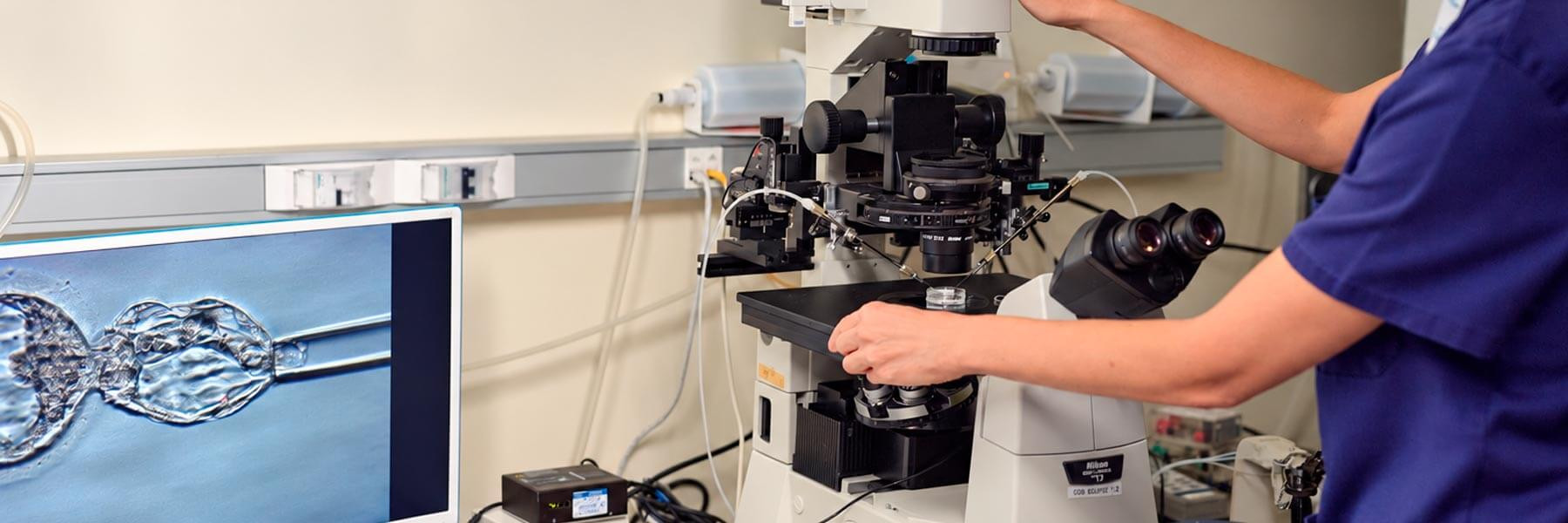
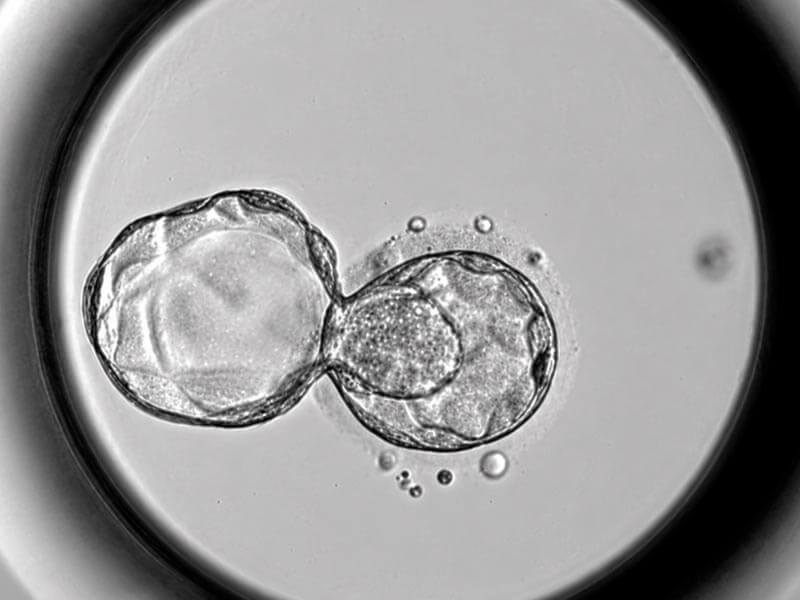
PGT-A involves taking a biopsy from the embryo, usually at the blastocyst stage, around day 5 or 6 of development. At this point, two groups of cells can be distinguished: the inner cell mass, which will develop into the fetus, and the trophectoderm, which mainly contributes to the formation of the placenta.
An embryologist removes a small number of trophectoderm cells, which are sent to a genetics laboratory for chromosomal analysis. One of the most widely used methods is next-generation sequencing (NGS), which can assess all the chromosomes in the sample. While the analysis is carried out, the embryo is vitrified and stored until the result is available.
The laboratory can then classify embryos as euploid, aneuploid or, in some cases, mosaic, where the sample contains a mixture of cells with different chromosomal complements. It is important to remember that PGT-A is an embryo selection test, not a guarantee of pregnancy. Knowing that an embryo is euploid provides additional information, but its ability to implant also depends on other factors.
When a couple have undergone several assisted reproduction treatments, experienced pregnancy loss or are starting treatment at an age when the risk of chromosomal abnormalities in embryos is higher, they often wonder whether it is possible to learn more about their embryos before transferring them to the uterus.
This is where PGT-A, or preimplantation genetic testing for aneuploidy, comes in. This technique assesses whether an embryo has the expected number of chromosomes before a decision is made about transferring it. However, PGT-A does not test for every possible genetic condition. It primarily looks for extra or missing chromosomes. An embryo with the expected number of chromosomes is described as euploid, whereas an embryo with an abnormal number is described as aneuploid.
In certain circumstances, this information can help determine which embryo to transfer. However, PGT-A is not routinely recommended for everyone undergoing IVF. Its use should always be assessed in light of the patient's age, reproductive history and number of available embryos.
There is no single situation in which PGT-A should always be performed. Its usefulness must be assessed individually, as the potential benefit is not the same for every patient.
As a woman's age increases, so does the likelihood that her eggs will give rise to embryos with an abnormal number of chromosomes. Advanced maternal age is therefore one of the circumstances in which PGT-A may be considered more frequently, particularly when several blastocysts are available for testing.
The risk of aneuploidy rises progressively with age. The usefulness of PGT-A also depends on ovarian reserve and the number of embryos obtained. For older women, selecting a euploid embryo may help avoid some transfers of aneuploid embryos, which are less likely to develop normally and carry a higher risk of miscarriage.
A substantial proportion of miscarriages in the first trimester are associated with chromosomal abnormalities in the embryo. When a woman or couple have experienced several pregnancy losses, they may therefore consider whether PGT-A could help select euploid embryos before another transfer.
Available evidence suggests that PGT-A may reduce the risk of miscarriage in some patient groups. However, it has not yet been clearly demonstrated that it increases the cumulative likelihood of a live birth for all couples experiencing recurrent miscarriage. Before recommending the test, it is therefore advisable to investigate possible causes of the losses and consider factors such as the woman's age, ovarian reserve and the number of embryos likely to be obtained.
When several embryo transfers have not resulted in an ongoing pregnancy, one possible explanation is that some of the embryos transferred had chromosomal abnormalities. In these circumstances, PGT-A may be considered as one element of the assessment, as it provides information on the chromosomal status of blastocysts before deciding which one to transfer.
However, implantation failure can have many causes and is not always related to an embryo's chromosomal make-up. PGT-A should therefore not be seen as an automatic solution following several unsuccessful attempts, but rather as an option to consider as part of a broader assessment of the patient's circumstances.
In some cases of severe male-factor infertility, it may be particularly important to investigate the underlying cause and assess whether an associated genetic abnormality is present. However, severe male-factor infertility alone does not necessarily indicate a need for PGT-A. Before making a decision, specific genetic tests in the male partner may be required to determine whether there is an increased risk that warrants a particular approach.
The main purpose of PGT-A is to provide more information about embryos before transfer. One benefit is that it can help avoid transferring embryos identified as aneuploid, which are less likely to implant successfully and more likely to result in miscarriage.
When more than one blastocyst is available, knowing which ones are euploid can therefore help establish a more informed order of transfer and reduce the number of transfers involving embryos with a low likelihood of resulting in an ongoing pregnancy. Available evidence also indicates that PGT-A may reduce miscarriage risk in certain patient groups, which may be particularly relevant for older women or those with a history of pregnancy loss.
However, it is important to emphasise that PGT-A does not increase the number of chromosomally normal embryos a patient produces or guarantee a higher cumulative live birth rate. Rather than viewing it as a technique that improves every IVF outcome, it should be regarded as an embryo selection tool that may offer benefits for particular patient groups.
Actualmente la biopsia suele realizarse en fase de blastocisto y se toman unas pocas células del trofoectodermo, sin extraer células de la masa celular interna que dará lugar al futuro feto. La experiencia acumulada con esta técnica indica que la biopsia de trofoectodermo realizada por profesionales experimentados tiene un impacto bajo sobre la viabilidad del embrión. Consulta nuestras tecnologías de laboratorio y el proceso de Fecundación In Vitro con PGT-A.
También hay que tener en cuenta las limitaciones propias del análisis. La biopsia estudia únicamente una pequeña muestra de células y puede obtener resultados mosaico o, en algunos casos, resultados no concluyentes. Por este motivo, el PGT-A debe realizarse en laboratorios con experiencia, como el de IVF-Life, y siempre acompañado de un adecuado asesoramiento antes de tomar decisiones sobre los embriones.
Nowadays, the biopsy is usually performed at the blastocyst stage. A small number of cells are taken from the trophectoderm, without removing cells from the inner cell mass that will develop into the fetus. Experience with this technique indicates that trophectoderm biopsy carried out by experienced professionals has a low impact on embryo viability. Explore our laboratory technologies and the IVF with PGT-A process.
The limitations of the analysis must also be taken into account. A biopsy examines only a small sample of cells and may produce a mosaic result or, in some cases, an inconclusive result. For this reason, PGT-A should be performed by experienced laboratories, such as IVF-Life, and always accompanied by appropriate counselling before decisions are made about embryos.
The time needed to obtain results depends on the genetics laboratory, the method used and how each centre operates. During this period, blastocysts remain vitrified. Once the results are received, the medical team can plan the transfer of the selected embryo in a subsequent cycle.
This means that IVF treatment with PGT-A does not usually involve a fresh embryo transfer a few days after egg collection. Instead, the process takes place in two stages: first, the embryos are obtained, biopsied and vitrified; subsequently, the endometrium is prepared for embryo transfer.
After testing, it is possible that none of the biopsied embryos will be classified as euploid. This becomes more common with increasing maternal age, as the proportion of eggs that may give rise to embryos with chromosomal abnormalities also rises. If this happens, an embryo classified as aneuploid will not be transferred simply to complete the treatment. The medical team will review the results and explain the available options in light of the individual circumstances. Depending on the patient's age, ovarian reserve, number of embryos obtained and previous treatments, another stimulation cycle may be considered in an attempt to obtain more embryos.
Practice Committee of the American Society for Reproductive Medicine.
The use of preimplantation genetic testing for aneuploidy: a committee opinion.
.
2024;
421-434
Documento de recomendaciones clínicas de la Sociedad Americana de Medicina Reproductiva sobre el uso del diagnóstico genético preimplantacional para aneuploidías (PGT-A).:
https://www.asrm.org/practice-guidance/practice-committee-documents/the-use-of-preimplantation-genetic-testing-for-aneuploidy-a-committee-opinion-2024/
Junhao Yan, Yingying Qin, Han Zhao, Yun Sun, Fei Gong, Rong Li.
Live Birth with or without Preimplantation Genetic Testing for Aneuploidy.
.
2021;
2047-2058
Ensayo clínico multicéntrico que compara los resultados reproductivos de pacientes sometidas a fecundación in vitro con y sin PGT-A:
https://pubmed.ncbi.nlm.nih.gov/34818479/
Edith Coonen, Carmen Rubio, Dimitra Christopikou, Eftychia Dimitriadou, Julia Gontar, Veerle Goossens.
ESHRE PGT Consortium good practice recommendations for the detection of structural and numerical chromosomal aberrations.
.
2020;
hoaa017
Recomendaciones de la Sociedad Europea de Reproducción Humana y Embriología sobre las técnicas utilizadas para detectar alteraciones cromosómicas numéricas y estructurales en embriones.:
https://pubmed.ncbi.nlm.nih.gov/32500102/
Practice Committees of the American Society for Reproductive Medicine and the Genetic Counseling Professional Group.
Clinical management of mosaic results from preimplantation genetic testing for aneuploidy of blastocysts: a committee opinion.
.
2023;
973-982
Documento de recomendaciones clínicas sobre la interpretación y el manejo de resultados de mosaicismo cromosómico obtenidos mediante PGT-A.:
https://pubmed.ncbi.nlm.nih.gov/37678731/
Human Fertilisation and Embryology Authority.
Pre-implantation genetic testing for aneuploidy (PGT-A).
.
2020;
nformación de la autoridad británica de fertilización y embriología sobre el funcionamiento del PGT-A, sus posibles beneficios, riesgos y limitaciones.:
https://www.hfea.gov.uk/treatments/treatment-add-ons/pre-implantation-genetic-testing-for-aneuploidy-pgt-a/
Filipa Carvalho, Edith Coonen, Veerle Goossens, Georgia Kokkali, Carmen Rubio, Madelon Meijer-Hoogeveen.
ESHRE PGT Consortium good practice recommendations for the organisation of PGT.
.
2020;
hoaa021
Recomendaciones del Consorcio PGT de ESHRE sobre la organización de los programas de diagnóstico genético preimplantacional:
https://pubmed.ncbi.nlm.nih.gov/32524036/
Georgia Kokkali, Giovanni Coticchio, Fernando Bronet, Catherine Celebi, Danilo Cimadomo, Veerle Goossens.
ESHRE PGT Consortium and SIG Embryology good practice recommendations for polar body and embryo biopsy for PGT.
.
2020;
hoaa020
Documento de recomendaciones técnicas de ESHRE sobre la biopsia embrionaria y de cuerpos polares utilizada en las pruebas genéticas preimplantacionales:
https://pubmed.ncbi.nlm.nih.gov/32500104/
ESHRE Guideline Group on Recurrent Pregnancy Loss.
ESHRE guideline: recurrent pregnancy loss: an update in 2022.
.
2023;
hoad002
Guía clínica de la Sociedad Europea de Reproducción Humana y Embriología sobre el diagnóstico y tratamiento de los abortos de repetición:
https://www.eshre.eu/Guidelines-and-Legal/Guidelines/Recurrent-pregnancy-loss
Santiago Munné, Brian Kaplan, John L. Frattarelli, Tim Child, Gary Nakhuda, F. Nicholas Shamma.
Preimplantation genetic testing for aneuploidy versus morphology as selection criteria for single frozen-thawed embryo transfer in good-prognosis patients: a multicenter randomized clinical trial.
.
2019;
1071-1079.e7
Ensayo clínico multicéntrico que compara la selección embrionaria mediante PGT-A con la selección basada en criterios morfológicos convencionales.:
https://pubmed.ncbi.nlm.nih.gov/31551155/
Martine De Rycke, Antonio Capalbo, Edith Coonen, Giovanni Coticchio, Francesco Fiorentino, Veerle Goossens.
ESHRE survey results and good practice recommendations on managing chromosomal mosaicism.
.
2022;
hoac044
Recomendaciones de ESHRE sobre la identificación, interpretación y manejo del mosaicismo cromosómico detectado mediante pruebas genéticas preimplantacionales:
https://pubmed.ncbi.nlm.nih.gov/36349144/
Privacy Policy
IVF-LIFE, hereby informs you of its privacy policy applied to personal data. The use of the website does not imply that the user must provide any information regarding their identity, and cannot be associated with a specific user by the company. In the event that personal data is provided, this data will be collected and used in accordance with the limitations and rights set out in the aforementioned regulation.
WHO IS RESPONSIBLE FOR THE PROCESSING OF YOUR DATA?
DATA CONTROLLER: IVF SPAIN ALICANTE S.L.U (hereinafter IVF-Life)
CIF: B-54973227
Postal Address: Avenida de Ansaldo, no. 13, 03540, Alicante (Alicante)
Contact with the Data Protection Officer: dpo@ivf-life-group.com
DATA CONTROLLER: Instituto Vasco de Fertilidad (hereinafter IVF-Life)
CIF: B95575874
Postal Address: Avenida de Tolosa, 71-73, 20018 Donostia / San Sebastián (Spain)
Contact with the Data Protection Officer: dpo@ivf-life-group.com
DATA CONTROLLER: IVF Spain Madrid (hereinafter IVF-Life)
CIF: B 85138113
Postal Address: C/ de Manuel de Falla, 6-8, 28036 Madrid (Spain)
Contact with the Data Protection Officer: dpo@ivf-life-group.com
WHAT TYPE OF DATA DO WE PROCESS?
Depending on the products, services, or functionalities that you wish to enjoy, we may need to process different types of data. In general, this data will be, depending on the case, the following:
- Your identification data: for example: name, surname, language, country from which you interact with us, contact details, etc.
- Connection, geolocation and navigation data.
- Commercial information if you are subscribed to our newsletter.
- Data about your tastes and preferences.
WHAT IS THE ORIGIN OF THE DATA?
The use of certain services or requests addressed to IVF-LIFE are subject to the prior completion of the corresponding form. All the information provided by the User through the forms on the Portal for the above purposes or any other must be truthful.
To this end, the User guarantees the authenticity of all the data provided and will keep the information provided to IVF-LIFE perfectly up to date so that it corresponds at all times to the User's real situation. In any case, the User will be solely responsible for any false or inaccurate statements made and for any damage caused to IVF-LIFE or third parties because of the information provided.
By clicking on the "send" button on the corresponding form, the User expressly consents to his/her data being used to send professional communications about his/her query by e-mail or by any other means.
However, the User may revoke the consent given and oppose the sending of such communications in each of the communications received or by sending them to the address indicated in this legal notice and enabled for this purpose. Likewise, in each of the communications sent, the procedure for opposing the sending of new professional communications shall be expressly indicated.
Users who provide personal data of other natural persons are obliged to comply, in relation to said data, with all obligations deriving from the data protection regulations in force, and in particular the duty to inform and obtain the consent of the owner of the personal data.
When we request your personal data to provide access to certain website functionalities, we will mark the required fields to ensure the service can be delivered.
Please note that if you choose not to provide us with this data, you may not be able to complete your registration as a user or you may not be able to enjoy those services or functionalities.
For the processing of data, IVF-LIFE adopts the security levels required by current European and national legislation on the Protection of Personal Data. Notwithstanding the above, technical security in a medium such as the Internet is not impregnable and there may be leaks due to the malicious actions of third parties.
Our services are aimed at people of legal age, in the event that some of our services are specifically aimed at minors, IVF-LIFE will request the consent of parents or guardians for the collection of personal data or, where appropriate, for the automated processing of data as set out in current legislation. If the User is a minor, they are required to have the prior consent of their parents or guardians before proceeding to the inclusion of their personal data in the forms on the Website.
Initially, your personal data are provided directly by you, but in certain cases they may originate from centres, referring doctors and public health systems with which there is collaboration.
FOR WHAT PURPOSES DO WE PROCESS YOUR PERSONAL DATA?
Depending on how you interact with our website, we will process your personal data for the following purposes:
To deal with requests or requests that you make through the different means incorporated into our website.
We only process the personal data that is strictly necessary to manage or resolve your request or application.
For marketing purposes
To the extent that you subscribe to our newsletter, your personal data will be used for the periodic sending of company newsletters.
You should remember that you can unsubscribe from the newsletter, at any time and free of charge, by contacting us via the e-mail address of the data controller or by following the instructions that we will provide you with in each of our communications.
For the management of social networks
If you follow us or contact us through the different social networks in which we are present, we will process the data that you provide to us through these for the sole purpose of responding to your messages or comments and managing our contact list.
Usability and quality analysis to improve our services (cookies).
If you access our platform, we inform you that we will process your browsing data for analytical and statistical purposes, i.e. to understand how users interact with our platform and thus be able to make improvements to it. Likewise, we sometimes carry out quality actions and surveys aimed at finding out the degree of satisfaction of our customers and users and detecting those areas in which we can improve.
WHAT IS THE LEGAL BASIS FOR PROCESSING YOUR DATA?
The legal basis that allows us to process your personal data also depends on the purpose for which we process them, so we will find different legal bases under the following purposes:
Attention to requests for information.
The legal basis for the processing of your data is the informed consent to respond to queries raised through the website, forms and other means provided, which implies the prior reading and acceptance of these conditions by the interested party.
Marketing
The legitimate basis for processing your data for marketing purposes is the consent you provide.
Social networking
The basis of legitimacy is the informed consent to respond to queries raised through the social network, as well as the time when you follow us and want to be part of our contact list.
Usability and quality analysis (cookies)
User consent to the use of cookies.
HOW LONG WILL WE KEEP YOUR DATA?
Request for information. We will process your data for as long as it is necessary to deal with your request or request and thereafter 1 year.
Marketing
We will process your data until you unsubscribe or cancel your subscription to the newsletter.
Social media
We will process your data for as long as it is necessary to deal with your request and for as long as you are a follower of our profile.
WILL WE SHARE YOUR DATA WITH THIRD PARTIES?
Personal data will not be transferred or communicated to third parties, except: legal obligation, we obtain your express consent, or we understand that there is a legitimate interest on our part, which will be duly communicated to you.
However, we inform you that we are present in the following social networks: Facebook, LinkedIn, Instagram and YouTube, to keep our followers informed regarding the company's news and services.
You can access these social networks voluntarily and through the links available on the website itself or by accessing directly and on your own from your browser or installed app.
You should know that this website is not responsible for the use of the data that these social networks may make. However, when these data are generated in the social network and derive from an interaction with our website, we will not be held responsible for the use of such data.
In order to consent to our transfer from this website and the processing of your data, you should carefully read the privacy policy of the social network you wish to access:
Facebook: Facebook Privacy Policy
Instagram: Instagram Privacy Policy
LinkedIn: Linkedin Privacy Policy
YouTube: Youtube Privacy Policy
Spotify: Spotify Privacy Policy
In this way, before clicking on the logos of the SS. RR. present on our website, you can inform yourself and make a redirection with prior knowledge of the processing of your data and on a voluntary basis.
Other technological services:
- WhatsApp: WhatsApp Privacy Policy
- Companies of the "IVF LIFE Group" on the legal basis of consent or legitimate interest: Instituto Vasco de Fertilidad S.L.U., with NIF B95575874 and address at Avda Tolosa, 71-73 Donostia (Gipuzkoa), and IVF Spain Madrid S.L., with NIF B85138113 and address at Calle Manuel de Falla, 6-8, 28036 Madrid.
WHAT ARE YOUR RIGHTS WHEN YOU PROVIDE US WITH YOUR DATA?
We undertake to respect the confidentiality of your personal data and to guarantee you the exercise of your rights.
You may exercise them free of charge by sending us an e-mail to our address above, simply by providing proof of identity, the reason for your request and the right you wish to exercise.
If we consider it necessary in order to identify you, we may ask you for a copy of a document proving your identity. In particular, regardless of the purpose or the legal basis on which we process your data, you have the right to:
Ask us for access to the data we hold about you.
Ask us to rectify the data we already hold about you. Please note that by actively providing us with your personal information in any way, you warrant that it is true and accurate and you undertake to notify us of any changes or modifications to it.
Ask us to delete your data to the extent that they are no longer necessary for the purpose for which we need to process them as we have previously informed you, or to the extent that we no longer have the legitimacy to do so.
Ask us to restrict the processing of your data, which means that in certain cases you may ask us to temporarily stop processing the data or to keep it longer than necessary when you may need it. If you have given us your consent to process your data for any purpose, you also have the right to withdraw your consent at any time.
To receive the personal data concerning you that you have provided to us in a structured, commonly used and machine-readable form and to transfer it to another data controller.
Moreover, where the processing of your data is based on our legitimate interest, you also have the right to object to the processing of your data.
Finally, we inform you of your right to lodge a complaint with the relevant data protection supervisory authority, with the Spanish Data Protection Agency.
CHANGES TO THE PRIVACY POLICY
We may change the information contained in this Privacy Policy from time to time. If we do so, we will notify you by various means through the Platform, or we will notify you at your email address when the change in question is significant to your privacy, so that you can review the changes, assess them and, where appropriate, object to or unsubscribe from any service or functionality.
INFORMATION ABOUT COOKIES
We use cookies and similar devices to facilitate your navigation on the Platform, to know how you interact with us and, in certain cases, to be able to show you advertising based on your browsing habits. Please read our Cookie Policy to learn more about the cookies and similar devices we use, their purpose and other information of interest.