By Pedro Royo Manero (Gynecologist – License No. 312203918).

To understand what happens in these cases, it is important to know how the hypothalamic-pituitary-testicular axis works. This hormonal system regulates much of a man's hormone and sperm production. The hypothalamus, located in the brain, sends signals to the pituitary gland to produce two essential hormones: follicle-stimulating hormone (FSH) and luteinising hormone (LH).
FSH plays a direct role in the function of Sertoli cells and sperm production, while LH stimulates the Leydig cells in the testicles to produce testosterone. However, when a man takes testosterone through injections, gels, implants or other preparations, the brain detects elevated levels of this hormone in the bloodstream and responds by reducing the signals it sends to the testicles. As a result, LH and FSH levels decrease.
This is where the paradox arises. Although blood tests may show high testosterone levels, the concentration of testosterone inside the testicles can fall significantly, precisely because the body's natural production has been suppressed.
Without adequate intratesticular testosterone levels and sufficient FSH stimulation, sperm production may decline dramatically or stop altogether. This mechanism, known as negative feedback on the hypothalamus and pituitary gland, can lead to severe oligozoospermia or azoospermia.
The use of testosterone and anabolic steroids has become increasingly widespread in recent years, particularly in sports, gyms and on social media, where these substances are often promoted as a quick way to build muscle mass, improve physical performance or achieve certain changes in body composition.
However, from a reproductive perspective, there is an important paradox: testosterone administered from outside the body can cause the testicles to stop producing sperm. In other words, a hormone commonly associated with male sexual function can, when used externally without an appropriate medical indication, act as a form of unintended male contraception.
Both the American Urological Association (AUA) and the American Society for Reproductive Medicine (ASRM) warn that exogenous testosterone should not be used by men who are trying to conceive, as it can significantly suppress sperm production and may even stop it altogether.
The severity of these effects depends on several factors, including the dose, duration of use, type of testosterone preparation, simultaneous use of other anabolic steroids and the patient's previous hormonal status. Not all men experience the same changes. However, one of the most common consequences is a substantial reduction in sperm production.
A semen analysis in a man using exogenous testosterone may reveal anything from a significant reduction in sperm concentration to azoospermia, which means that no sperm are present in the ejaculate. Another possible consequence is severe oligozoospermia, a condition in which sperm are still present but in extremely low numbers.
Not every man who uses testosterone will develop azoospermia, as individual responses vary considerably. Nevertheless, exogenous testosterone can almost completely suppress spermatogenesis. This means that a man may maintain his sex drive, erectile function and even high blood testosterone levels while experiencing a substantial reduction in fertility.
When LH and FSH suppression continues over time, various physical changes may occur. As testicular activity decreases, the testicles may become smaller, a condition known as testicular atrophy.
However, this does not necessarily mean that the testicles have permanently lost their function. In many cases, the reduction in activity results from hormonal suppression caused by insufficient stimulation from the brain. Nevertheless, the longer the exposure to testosterone and the older the patient, the more difficult it may be to predict how long hormonal function and sperm production will take to recover.
In most cases, yes. Sperm production can recover after stopping exogenous testosterone, although this does not happen immediately. Under normal conditions, spermatogenesis takes several weeks. In addition, the hormonal axis that has been suppressed must first recover its normal function.
Some men begin producing sperm again within a few months of stopping testosterone, while others may need 6, 12 or even more months. Recovery time depends on several factors, including how long testosterone or anabolic steroids have been used, the doses taken and the type of preparation.
Older age and prolonged exposure also appear to slow down recovery. Itis also important to distinguish between the return of some sperm to the ejaculate and the recovery of semen parameters sufficient to achieve a natural pregnancy. These two milestones do not necessarily occur at the same time.
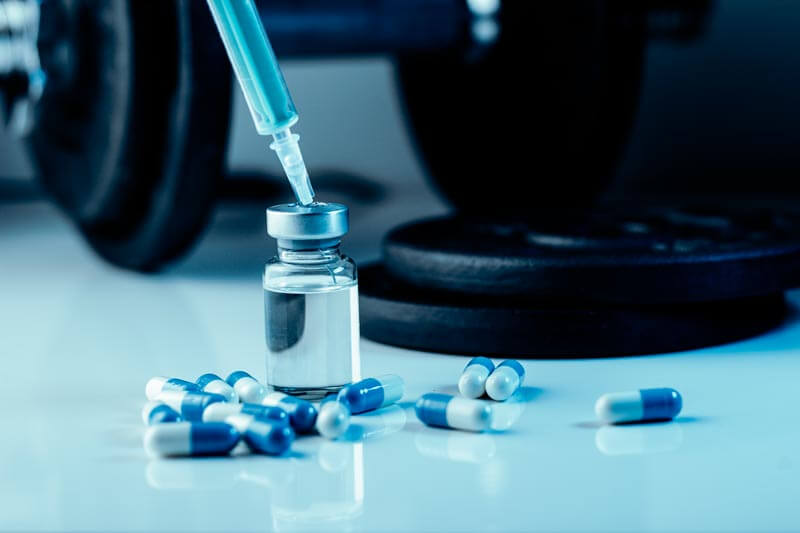
In some sporting and bodybuilding environments, post-cycle therapy (PCT) refers to combinations of medications that individuals take after a course of anabolic steroids in an attempt to restart their natural hormone production. However, post-cycle therapy should never be undertaken without medical supervision.
In selected patients, medications such as human chorionic gonadotrophin (hCG), clomiphene or other hormonal modulators may be used to support the recovery of testicular function. Nevertheless, their suitability, dosage and duration must be determined according to each man's hormonal profile and reproductive circumstances.
When a man has used testosterone or anabolic steroids and wishes to become a father, the first step is to assess his current reproductive health. Not every patient will require the same treatment. The following steps can help guide the assessment and recovery of male fertility.
If testosterone is being used without a medical indication, the first step is generally to discontinue its use, always with professional guidance. However, if testosterone replacement therapy has been prescribed to treat hypogonadism, it should never be stopped or modified without consulting a doctor. In these cases, alternative treatment strategies may be considered to help manage symptoms while minimising unnecessary risks to fertility.
A semen analysis determines whether sperm are present in the ejaculate and, if so, assesses their concentration, motility and morphology. A hormonal assessment may also include:
FSH and LH levels are particularly useful for determining whether the hormonal axis remains suppressed and for distinguishing between different types of hormonal dysfunction.
For many men, stopping testosterone and allowing sufficient time for recovery enables the hormonal axis to gradually resume its normal function. However, in other cases, particularly when azoospermia persists, when faster recovery is desired for reproductive reasons or when hormonal suppression remains significant, a specialist may consider hormonal treatment.
One option is human chorionic gonadotrophin (hCG), which acts in a similar way to LH and stimulates testosterone production within the testicles. In some cases, FSH may also be administered to stimulate spermatogenesis directly.
Selective oestrogen receptor modulators, such as clomiphene, may also be considered for certain patients to encourage the body's natural production of gonadotrophins. However, these treatments must be tailored to each individual. The choice of treatment depends on semen analysis results, hormone levels, duration of testosterone use, age and reproductive priorities.
Having used testosterone or anabolic steroids does not necessarily mean that you have permanently lost the ability to become a father. In many cases, sperm production can recover. However, identifying the most appropriate approach requires understanding the extent to which testicular function has been suppressed.
At IVF-Life, our male fertility assessment evaluates semen analysis results, hormonal profiles and any history of testosterone or anabolic steroid use. This allows our specialists to determine whether it is advisable to wait for spontaneous recovery, consider specific treatment or explore assisted reproductive techniques when necessary.
Some patients recover sufficient sperm production to attempt conception naturally. In others, recovery may be partial, and techniques such as in vitro fertilisation (IVF) with intracytoplasmic sperm injection (ICSI) can make it possible to work with very small numbers of sperm.
The most important thing is to avoid attempting to resolve the problem through unsupervised combinations of hormonal medications. The same hormonal manipulation that initially affected fertility may make recovery more difficult if further treatments are used without understanding what is happening in the body.
Therefore, if you wish to become a father, a specialist fertility assessment is essential to establish your current reproductive health and develop a personalised strategy aimed at restoring sperm production and maximising your chances of achieving a pregnancy.
American Urological Association (AUA), American Society for Reproductive Medicine (ASRM).
Diagnosis and Treatment of Infertility in Men: AUA/ASRM Guideline Part II.
.
2021;
62–69
Consultar la guía clínica de la AUA/ASRM sobre el tratamiento de la infertilidad masculina.:
https://www.asrm.org/practice-guidance/practice-committee-documents/diagnosis-and-treatment-of-infertility-in-men-aua-asrm-guideline-part2/
Bhasin S, Brito JP, Cunningham GR, Hayes FJ, Hodis HN, Matsumoto AM.
Testosterone Therapy in Men With Hypogonadism: An Endocrine Society Clinical Practice Guideline.
.
2018;
1715–1744
Consultar la guía de la Endocrine Society sobre el tratamiento con testosterona en hombres con hipogonadismo:
https://www.endocrine.org/clinical-practice-guidelines/testosterone-therapy
Rajmil O, Moreno-Sepulveda J.
Recovery of spermatogenesis after androgenic anabolic steroids abuse in men. A systematic review of the literature.
.
2024;
116–124
Consultar la revisión sistemática sobre la recuperación de la espermatogénesis tras el consumo de esteroides anabolizantes:
https://pubmed.ncbi.nlm.nih.gov/37567343/
McBride JA, Coward RM.
Recovery of spermatogenesis following testosterone replacement therapy or anabolic-androgenic steroid use.
.
2016;
373–380
Consultar la revisión sobre la recuperación de la espermatogénesis tras el uso de testosterona o esteroides anabolizantes:
https://pubmed.ncbi.nlm.nih.gov/26908067/
Crosnoe LE, Grober E, Ohl D, Kim ED.
Exogenous testosterone: a preventable cause of male infertility.
.
2026;
106–113
Consultar el artículo sobre la testosterona exógena como causa prevenible de infertilidad masculina:
https://pubmed.ncbi.nlm.nih.gov/26813847/
Tatem AJ, Beilan J, Kovac JR, Lipshultz LI.
Management of Anabolic Steroid-Induced Infertility: Novel Strategies for Fertility Maintenance and Recovery.
.
2020;
141–150
Consultar la revisión sobre las estrategias para preservar y recuperar la fertilidad tras el uso de esteroides anabolizantes:
https://pubmed.ncbi.nlm.nih.gov/30929329/
Al Hashimi M, Pinggera GM, Shah R, Agarwal A.
Clinician's guide to the management of azoospermia induced by exogenous testosterone or anabolic-androgenic steroids.
.
2025;
330–341
Consultar la revisión clínica sobre el manejo de la azoospermia inducida por testosterona exógena o esteroides anabolizantes:
https://pubmed.ncbi.nlm.nih.gov/39820213/
Wenker EP, Dupree JM, Langille GM, Kovac J, Ramasamy R, Lamb D.
The Use of HCG-Based Combination Therapy for Recovery of Spermatogenesis after Testosterone Use.
.
2026;
1334–1337
Consultar el estudio sobre el uso de terapia combinada con hCG para recuperar la espermatogénesis tras el tratamiento con testosterona:
https://pubmed.ncbi.nlm.nih.gov/25904023/
Esposito M, Salerno M, Calvano G, Agliozzo R, Ficarra V, Sessa F.
Impact of anabolic androgenic steroids on male sexual and reproductive function: a systematic review.
.
2023;
43–50
Consultar la revisión sistemática sobre el impacto de los esteroides anabolizantes en la función sexual y reproductiva masculina:
https://pubmed.ncbi.nlm.nih.gov/35146992/
Solanki P, Eu B, Smith J, Allan C, Lee K.
Physical, psychological and biochemical recovery from anabolic steroid-induced hypogonadism: a scoping review.
.
2023;
e230358
Consultar la revisión sobre la recuperación física, psicológica y bioquímica del hipogonadismo inducido por esteroides anabolizantes:
https://pubmed.ncbi.nlm.nih.gov/37855241/
Privacy Policy
IVF-LIFE, hereby informs you of its privacy policy applied to personal data. The use of the website does not imply that the user must provide any information regarding their identity, and cannot be associated with a specific user by the company. In the event that personal data is provided, this data will be collected and used in accordance with the limitations and rights set out in the aforementioned regulation.
WHO IS RESPONSIBLE FOR THE PROCESSING OF YOUR DATA?
DATA CONTROLLER: IVF SPAIN ALICANTE S.L.U (hereinafter IVF-Life)
CIF: B-54973227
Postal Address: Avenida de Ansaldo, no. 13, 03540, Alicante (Alicante)
Contact with the Data Protection Officer: dpo@ivf-life-group.com
DATA CONTROLLER: Instituto Vasco de Fertilidad (hereinafter IVF-Life)
CIF: B95575874
Postal Address: Avenida de Tolosa, 71-73, 20018 Donostia / San Sebastián (Spain)
Contact with the Data Protection Officer: dpo@ivf-life-group.com
DATA CONTROLLER: IVF Spain Madrid (hereinafter IVF-Life)
CIF: B 85138113
Postal Address: C/ de Manuel de Falla, 6-8, 28036 Madrid (Spain)
Contact with the Data Protection Officer: dpo@ivf-life-group.com
WHAT TYPE OF DATA DO WE PROCESS?
Depending on the products, services, or functionalities that you wish to enjoy, we may need to process different types of data. In general, this data will be, depending on the case, the following:
- Your identification data: for example: name, surname, language, country from which you interact with us, contact details, etc.
- Connection, geolocation and navigation data.
- Commercial information if you are subscribed to our newsletter.
- Data about your tastes and preferences.
WHAT IS THE ORIGIN OF THE DATA?
The use of certain services or requests addressed to IVF-LIFE are subject to the prior completion of the corresponding form. All the information provided by the User through the forms on the Portal for the above purposes or any other must be truthful.
To this end, the User guarantees the authenticity of all the data provided and will keep the information provided to IVF-LIFE perfectly up to date so that it corresponds at all times to the User's real situation. In any case, the User will be solely responsible for any false or inaccurate statements made and for any damage caused to IVF-LIFE or third parties because of the information provided.
By clicking on the "send" button on the corresponding form, the User expressly consents to his/her data being used to send professional communications about his/her query by e-mail or by any other means.
However, the User may revoke the consent given and oppose the sending of such communications in each of the communications received or by sending them to the address indicated in this legal notice and enabled for this purpose. Likewise, in each of the communications sent, the procedure for opposing the sending of new professional communications shall be expressly indicated.
Users who provide personal data of other natural persons are obliged to comply, in relation to said data, with all obligations deriving from the data protection regulations in force, and in particular the duty to inform and obtain the consent of the owner of the personal data.
When we request your personal data to provide access to certain website functionalities, we will mark the required fields to ensure the service can be delivered.
Please note that if you choose not to provide us with this data, you may not be able to complete your registration as a user or you may not be able to enjoy those services or functionalities.
For the processing of data, IVF-LIFE adopts the security levels required by current European and national legislation on the Protection of Personal Data. Notwithstanding the above, technical security in a medium such as the Internet is not impregnable and there may be leaks due to the malicious actions of third parties.
Our services are aimed at people of legal age, in the event that some of our services are specifically aimed at minors, IVF-LIFE will request the consent of parents or guardians for the collection of personal data or, where appropriate, for the automated processing of data as set out in current legislation. If the User is a minor, they are required to have the prior consent of their parents or guardians before proceeding to the inclusion of their personal data in the forms on the Website.
Initially, your personal data are provided directly by you, but in certain cases they may originate from centres, referring doctors and public health systems with which there is collaboration.
FOR WHAT PURPOSES DO WE PROCESS YOUR PERSONAL DATA?
Depending on how you interact with our website, we will process your personal data for the following purposes:
To deal with requests or requests that you make through the different means incorporated into our website.
We only process the personal data that is strictly necessary to manage or resolve your request or application.
For marketing purposes
To the extent that you subscribe to our newsletter, your personal data will be used for the periodic sending of company newsletters.
You should remember that you can unsubscribe from the newsletter, at any time and free of charge, by contacting us via the e-mail address of the data controller or by following the instructions that we will provide you with in each of our communications.
For the management of social networks
If you follow us or contact us through the different social networks in which we are present, we will process the data that you provide to us through these for the sole purpose of responding to your messages or comments and managing our contact list.
Usability and quality analysis to improve our services (cookies).
If you access our platform, we inform you that we will process your browsing data for analytical and statistical purposes, i.e. to understand how users interact with our platform and thus be able to make improvements to it. Likewise, we sometimes carry out quality actions and surveys aimed at finding out the degree of satisfaction of our customers and users and detecting those areas in which we can improve.
WHAT IS THE LEGAL BASIS FOR PROCESSING YOUR DATA?
The legal basis that allows us to process your personal data also depends on the purpose for which we process them, so we will find different legal bases under the following purposes:
Attention to requests for information.
The legal basis for the processing of your data is the informed consent to respond to queries raised through the website, forms and other means provided, which implies the prior reading and acceptance of these conditions by the interested party.
Marketing
The legitimate basis for processing your data for marketing purposes is the consent you provide.
Social networking
The basis of legitimacy is the informed consent to respond to queries raised through the social network, as well as the time when you follow us and want to be part of our contact list.
Usability and quality analysis (cookies)
User consent to the use of cookies.
HOW LONG WILL WE KEEP YOUR DATA?
Request for information. We will process your data for as long as it is necessary to deal with your request or request and thereafter 1 year.
Marketing
We will process your data until you unsubscribe or cancel your subscription to the newsletter.
Social media
We will process your data for as long as it is necessary to deal with your request and for as long as you are a follower of our profile.
WILL WE SHARE YOUR DATA WITH THIRD PARTIES?
Personal data will not be transferred or communicated to third parties, except: legal obligation, we obtain your express consent, or we understand that there is a legitimate interest on our part, which will be duly communicated to you.
However, we inform you that we are present in the following social networks: Facebook, LinkedIn, Instagram and YouTube, to keep our followers informed regarding the company's news and services.
You can access these social networks voluntarily and through the links available on the website itself or by accessing directly and on your own from your browser or installed app.
You should know that this website is not responsible for the use of the data that these social networks may make. However, when these data are generated in the social network and derive from an interaction with our website, we will not be held responsible for the use of such data.
In order to consent to our transfer from this website and the processing of your data, you should carefully read the privacy policy of the social network you wish to access:
Facebook: Facebook Privacy Policy
Instagram: Instagram Privacy Policy
LinkedIn: Linkedin Privacy Policy
YouTube: Youtube Privacy Policy
Spotify: Spotify Privacy Policy
In this way, before clicking on the logos of the SS. RR. present on our website, you can inform yourself and make a redirection with prior knowledge of the processing of your data and on a voluntary basis.
Other technological services:
- WhatsApp: WhatsApp Privacy Policy
- Companies of the "IVF LIFE Group" on the legal basis of consent or legitimate interest: Instituto Vasco de Fertilidad S.L.U., with NIF B95575874 and address at Avda Tolosa, 71-73 Donostia (Gipuzkoa), and IVF Spain Madrid S.L., with NIF B85138113 and address at Calle Manuel de Falla, 6-8, 28036 Madrid.
WHAT ARE YOUR RIGHTS WHEN YOU PROVIDE US WITH YOUR DATA?
We undertake to respect the confidentiality of your personal data and to guarantee you the exercise of your rights.
You may exercise them free of charge by sending us an e-mail to our address above, simply by providing proof of identity, the reason for your request and the right you wish to exercise.
If we consider it necessary in order to identify you, we may ask you for a copy of a document proving your identity. In particular, regardless of the purpose or the legal basis on which we process your data, you have the right to:
Ask us for access to the data we hold about you.
Ask us to rectify the data we already hold about you. Please note that by actively providing us with your personal information in any way, you warrant that it is true and accurate and you undertake to notify us of any changes or modifications to it.
Ask us to delete your data to the extent that they are no longer necessary for the purpose for which we need to process them as we have previously informed you, or to the extent that we no longer have the legitimacy to do so.
Ask us to restrict the processing of your data, which means that in certain cases you may ask us to temporarily stop processing the data or to keep it longer than necessary when you may need it. If you have given us your consent to process your data for any purpose, you also have the right to withdraw your consent at any time.
To receive the personal data concerning you that you have provided to us in a structured, commonly used and machine-readable form and to transfer it to another data controller.
Moreover, where the processing of your data is based on our legitimate interest, you also have the right to object to the processing of your data.
Finally, we inform you of your right to lodge a complaint with the relevant data protection supervisory authority, with the Spanish Data Protection Agency.
CHANGES TO THE PRIVACY POLICY
We may change the information contained in this Privacy Policy from time to time. If we do so, we will notify you by various means through the Platform, or we will notify you at your email address when the change in question is significant to your privacy, so that you can review the changes, assess them and, where appropriate, object to or unsubscribe from any service or functionality.
INFORMATION ABOUT COOKIES
We use cookies and similar devices to facilitate your navigation on the Platform, to know how you interact with us and, in certain cases, to be able to show you advertising based on your browsing habits. Please read our Cookie Policy to learn more about the cookies and similar devices we use, their purpose and other information of interest.