By Isabel Herrera (Licensed Physician No. 030310741).

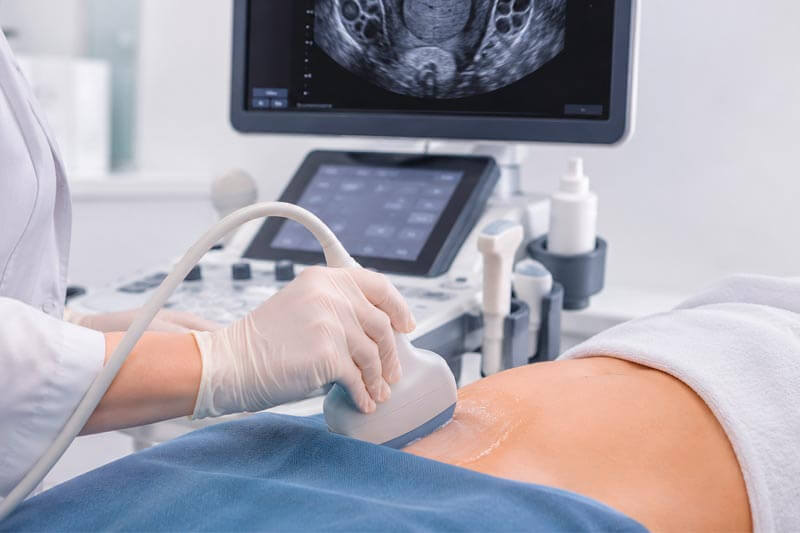
Ovarian reserve refers to the number of eggs remaining in the ovaries. Two main tools are used to assess it: anti-Müllerian hormone (AMH), measured through a blood test, and the antral follicle count (AFC), assessed by transvaginal ultrasound at the beginning of the menstrual cycle.
AMH is produced by the cells surrounding small ovarian follicles. Generally speaking, the lower the AMH level, the fewer follicles we can expect to respond to stimulation. There is no single threshold that can be applied to every woman, as results must be interpreted in the context of age, the laboratory used and the overall clinical assessment. Nevertheless, an AMH level below approximately 1 ng/mL is often considered indicative of reduced ovarian reserve.
The traditional criteria used to define a poor response in assisted reproduction have included approximate AMH levels of 0.5–1.1 ng/mL and an antral follicle count of fewer than 5–7. However, none of these figures should be interpreted in isolation. A woman with low AMH may still produce eggs capable of developing into viable embryos, while another woman with a high ovarian reserve may face other fertility challenges.
It is also important to distinguish between two terms that are often used interchangeably: low ovarian reserve and poor response to ovarian stimulation. The former can be estimated before treatment begins using AMH and AFC. The latter can only be properly assessed after the ovaries have responded to the stimulation medication.
A diagnosis of low ovarian reserve can cause considerable concern and uncertainty, particularly for women who want to become mothers and feel that time is against them. However, having a low ovarian reserve does not mean that pregnancy is impossible, or that all the eggs are necessarily of poorer quality.
What this measure primarily tells us is that the ovaries contain fewer follicles capable of responding to stimulation. As a result, in vitro fertilisation (IVF) may yield fewer eggs than would be retrieved from a patient with a higher ovarian reserve. Other equally important factors also come into play, including age, sperm quality, the response to previous treatments and, of course, how the embryos develop in the laboratory.
This is why, when ovarian reserve is low, treatment is not simply a matter of giving more medication in the hope of retrieving more eggs. Instead, it involves designing a strategy tailored to each patient's individual circumstances and realistic prospects.
Yes. A low AMH level does not mean that pregnancy using your own eggs is impossible. It suggests that fewer eggs are likely to be retrieved during stimulation, reducing the number of opportunities to obtain embryos.
This distinction matters because ovarian reserve is primarily a measure of quantity, whereas egg quality is much more closely linked to other factors, particularly age. For example, two women may have similar AMH levels but very different fertility prospects if one is 32 and the other is 42. Although both may produce few eggs, the likelihood of those eggs developing into chromosomally normal embryos will differ, mainly because of age.
For this reason, when ovarian reserve is low, the aim is generally to make the most of each ovarian response and every egg retrieved, recognising that no treatment can create new eggs or reverse the natural decline in ovarian reserve.
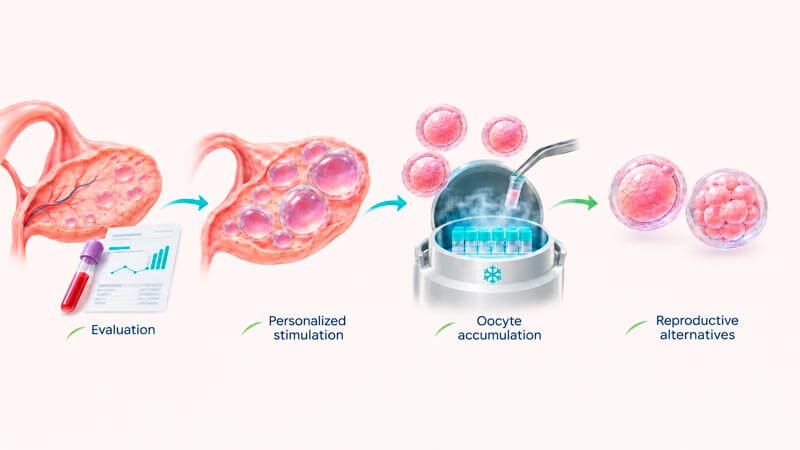
There is no single protocol suitable for everyone with a poor ovarian response, as the circumstances behind each case can vary considerably. Treatment must therefore be personalised, taking account of age, AMH, follicle count, previous stimulation cycles and the response achieved in those cycles.
When the ovarian response is poor, it may seem logical to assume that increasing medication doses will encourage more follicles to grow. However, the ovaries can only respond with the follicles available in that cycle, so progressively higher doses do not necessarily result in more eggs.
The aim is therefore not simply to increase the dose of gonadotrophins, but to select the protocol best suited to the patient's circumstances. Options range from conventional stimulation protocols to gentler approaches or changes to when stimulation begins.
When very few eggs are retrieved during each stimulation cycle, one option is to carry out several cycles and vitrify the mature eggs collected each time, building up a larger number before fertilisation. Vitrification allows the eggs to be preserved during this process, creating a larger pool than would probably be obtained from a single stimulation cycle.
This strategy does not make the ovaries produce more eggs in each cycle, nor does it improve their quality. It does, however, increase the total number of eggs available across several egg retrieval procedures, which may be particularly useful when a very poor response is expected.
In some cases, two rounds of stimulation may also be considered within the same menstrual cycle. Known as DuoStim, or double stimulation, this approach aims to retrieve eggs during both the follicular phase and the subsequent luteal phase. It may be particularly useful when eggs need to be accumulated within a limited period.
Culturing embryos to the blastocyst stage, usually around day 5 or 6, allows embryologists to observe which embryos continue to develop appropriately over a longer period and select those with the greatest potential for further treatment. Where maternal age is advanced and several blastocysts are available, preimplantation genetic testing for aneuploidy (PGT-A) may also be considered. This test assesses whether embryos have the correct number of chromosomes.
The decision to extend embryo culture, accumulate embryos or carry out PGT-A should therefore take account of the number of eggs retrieved, how the embryos develop and the information each technique can genuinely provide in the individual case.
In some cases, despite adjusting stimulation and making several attempts, very few eggs are retrieved, embryos fail to develop sufficiently, or the chances of pregnancy using the patient's own gametes remain very low. When this happens, it may be time to consider alternatives such as egg donation. This is an assisted reproduction treatment in which eggs from a donor are used to create embryos that are subsequently transferred to the patient.
Using eggs from younger women selected as donors changes the age-related factors affecting egg quality, making it possible to achieve high chances of pregnancy even in women whose own ovarian reserve is very low. For many patients, this means letting go of the possibility of passing on their own genetic material. Reaching that decision may take time, information and emotional support.
Patients with a low ovarian reserve or poor ovarian response are among those for whom personalised treatment matters most, precisely because even small differences between cycles may influence the strategy.
When a patient comes to an IVF-Life clinic, particularly if she has already undergone treatment elsewhere, we look beyond her AMH result. We also review her age, antral follicle count, ovarian response in previous cycles, medication doses used, number of mature eggs retrieved, fertilisation outcomes and subsequent embryo development.
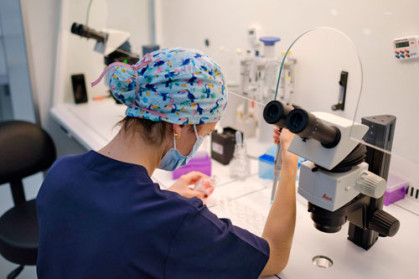
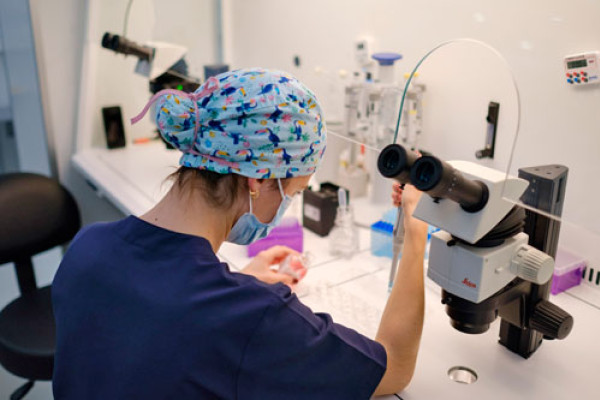
This information allows us to assess whether it is worth changing the stimulation protocol, carrying out several cycles to accumulate eggs or embryos, or considering other approaches. The work of the embryology laboratory is also especially important when only a few eggs are available, because every egg represents an opportunity that must be handled with great care during fertilisation, culture and any subsequent vitrification.
If you are looking for answers about your individual circumstances, book an initial consultation to explore your personalised IVF treatment:
Everything you need to know about IVF
Eating a balanced diet, avoiding smoking, reducing or eliminating alcohol consumption, exercising regularly and maintaining healthy lifestyle habits are all beneficial for general and reproductive health. However, no food, diet or supplement has currently been shown to reverse low ovarian reserve or rejuvenate eggs.
There is no universally established minimum number of follicles that automatically determines whether egg retrieval should go ahead or be cancelled. If a patient has a normal ovarian reserve but responds much less well than expected, the presence of just one or two follicles may prompt the medical team to consider whether to continue with that cycle or change the approach.
The situation is different for a woman with a known low ovarian reserve, where retrieving only a few eggs was expected from the outset. In these cases, even a single follicle may represent an opportunity. The decision to proceed with egg retrieval will depend on the patient's age, previous treatments, the size and development of the follicle, the planned strategy and the alternatives available.
Practice Committee of the American Society for Reproductive Medicine (ASRM).
Testing and interpreting measures of ovarian reserve: a committee opinion.
.
2020;
1151-1157
Documento oficial de la ASRM que analiza las pruebas utilizadas para evaluar la reserva ovárica, especialmente la hormona antimülleriana (AMH):
https://www.asrm.org/practice-guidance/practice-committee-documents/testing-and-interpreting-measures-of-ovarian-reserve-a-committee-opinion-2020/
Ferraretti AP, La Marca A, Fauser BCJM, Tarlatzis B, Nargund G, Gianaroli L.
ESHRE consensus on the definition of ‘poor response’ to ovarian stimulation for in vitro fertilization: the Bologna criteria.
.
2026;
1616–1624
Registro bibliográfico de PubMed correspondiente al consenso de la ESHRE que establece los criterios de Bolonia para identificar a las pacientes con baja respuesta a la estimulación ovárica:
https://pubmed.ncbi.nlm.nih.gov/21505041/
European Society of Human Reproduction and Embryology (ESHRE).
Ovarian Stimulation for IVF/ICSI. Guideline. Update 2025.
.
2025;
Página oficial de la ESHRE que reúne las recomendaciones clínicas actualizadas sobre estimulación ovárica en tratamientos de fecundación in vitro (FIV) e inyección intracitoplasmática de espermatozoides (ICSI):
https://www.eshre.eu/OSguide
Cobo A, Garrido N, Crespo J, José R, Pellicer A.
Accumulation of oocytes: a new strategy for managing low-responder patients.
.
2012;
424–432
Registro de PubMed de un estudio que evalúa la acumulación de ovocitos mediante vitrificación a lo largo de varios ciclos de estimulación como estrategia reproductiva para pacientes con baja respuesta ovárica:
https://pubmed.ncbi.nlm.nih.gov/22386762/
European Society of Human Reproduction and Embryology (ESHRE).
Doble estimulación ovárica (DuoStim) y baja respuesta — ESHRE (2025).
.
2025;
Página oficial de la guía ESHRE sobre estimulación ovárica:
https://www.eshre.eu/OSguide
Practice Committee of the American Society for Reproductive Medicine (ASRM).
The use of preimplantation genetic testing for aneuploidy: a committee opinion.
.
2024;
421–434
Documento oficial de la ASRM que revisa la evidencia científica sobre el uso del test genético preimplantacional para aneuploidías (PGT-A) en tratamientos de fecundación in vitro:
https://www.asrm.org/practice-guidance/practice-committee-documents/the-use-of-preimplantation-genetic-testing-for-aneuploidy-a-committee-opinion-2024/
European Society of Human Reproduction and Embryology (ESHRE).
Ovarian Stimulation for IVF/ICSI. Add-on treatments in predicted low responders.
.
2025;
Página oficial de la ESHRE que permite acceder a las recomendaciones sobre tratamientos complementarios o adyuvantes en pacientes con respuesta ovárica previsiblemente baja:
https://www.eshre.eu/OSguide
Yang S, Liu N, Li Y, Zhang L, Yue R.
Efficacy of the delayed start antagonist protocol for controlled ovarian stimulation in Bologna poor ovarian responders: a systematic review and meta-analysis.
.
2021;
347–362
Registro de PubMed correspondiente a una revisión sistemática y metaanálisis que evalúa la eficacia del protocolo de estimulación ovárica:
https://pubmed.ncbi.nlm.nih.gov/33236173/
Practice Committee of the American Society for Reproductive Medicine (ASRM).
Testing and interpreting measures of ovarian reserve: a committee opinion.
.
2020;
1151–1157
Documento oficial de la ASRM que examina las implicaciones clínicas de las pruebas de reserva ovárica, su utilidad para orientar la planificación de tratamientos reproductivos:
https://www.asrm.org/practice-guidance/practice-committee-documents/testing-and-interpreting-measures-of-ovarian-reserve-a-committee-opinion-2020/
Privacy Policy
IVF-LIFE, hereby informs you of its privacy policy applied to personal data. The use of the website does not imply that the user must provide any information regarding their identity, and cannot be associated with a specific user by the company. In the event that personal data is provided, this data will be collected and used in accordance with the limitations and rights set out in the aforementioned regulation.
WHO IS RESPONSIBLE FOR THE PROCESSING OF YOUR DATA?
DATA CONTROLLER: IVF SPAIN ALICANTE S.L.U (hereinafter IVF-Life)
CIF: B-54973227
Postal Address: Avenida de Ansaldo, no. 13, 03540, Alicante (Alicante)
Contact with the Data Protection Officer: dpo@ivf-life-group.com
DATA CONTROLLER: Instituto Vasco de Fertilidad (hereinafter IVF-Life)
CIF: B95575874
Postal Address: Avenida de Tolosa, 71-73, 20018 Donostia / San Sebastián (Spain)
Contact with the Data Protection Officer: dpo@ivf-life-group.com
DATA CONTROLLER: IVF Spain Madrid (hereinafter IVF-Life)
CIF: B 85138113
Postal Address: C/ de Manuel de Falla, 6-8, 28036 Madrid (Spain)
Contact with the Data Protection Officer: dpo@ivf-life-group.com
WHAT TYPE OF DATA DO WE PROCESS?
Depending on the products, services, or functionalities that you wish to enjoy, we may need to process different types of data. In general, this data will be, depending on the case, the following:
- Your identification data: for example: name, surname, language, country from which you interact with us, contact details, etc.
- Connection, geolocation and navigation data.
- Commercial information if you are subscribed to our newsletter.
- Data about your tastes and preferences.
WHAT IS THE ORIGIN OF THE DATA?
The use of certain services or requests addressed to IVF-LIFE are subject to the prior completion of the corresponding form. All the information provided by the User through the forms on the Portal for the above purposes or any other must be truthful.
To this end, the User guarantees the authenticity of all the data provided and will keep the information provided to IVF-LIFE perfectly up to date so that it corresponds at all times to the User's real situation. In any case, the User will be solely responsible for any false or inaccurate statements made and for any damage caused to IVF-LIFE or third parties because of the information provided.
By clicking on the "send" button on the corresponding form, the User expressly consents to his/her data being used to send professional communications about his/her query by e-mail or by any other means.
However, the User may revoke the consent given and oppose the sending of such communications in each of the communications received or by sending them to the address indicated in this legal notice and enabled for this purpose. Likewise, in each of the communications sent, the procedure for opposing the sending of new professional communications shall be expressly indicated.
Users who provide personal data of other natural persons are obliged to comply, in relation to said data, with all obligations deriving from the data protection regulations in force, and in particular the duty to inform and obtain the consent of the owner of the personal data.
When we request your personal data to provide access to certain website functionalities, we will mark the required fields to ensure the service can be delivered.
Please note that if you choose not to provide us with this data, you may not be able to complete your registration as a user or you may not be able to enjoy those services or functionalities.
For the processing of data, IVF-LIFE adopts the security levels required by current European and national legislation on the Protection of Personal Data. Notwithstanding the above, technical security in a medium such as the Internet is not impregnable and there may be leaks due to the malicious actions of third parties.
Our services are aimed at people of legal age, in the event that some of our services are specifically aimed at minors, IVF-LIFE will request the consent of parents or guardians for the collection of personal data or, where appropriate, for the automated processing of data as set out in current legislation. If the User is a minor, they are required to have the prior consent of their parents or guardians before proceeding to the inclusion of their personal data in the forms on the Website.
Initially, your personal data are provided directly by you, but in certain cases they may originate from centres, referring doctors and public health systems with which there is collaboration.
FOR WHAT PURPOSES DO WE PROCESS YOUR PERSONAL DATA?
Depending on how you interact with our website, we will process your personal data for the following purposes:
To deal with requests or requests that you make through the different means incorporated into our website.
We only process the personal data that is strictly necessary to manage or resolve your request or application.
For marketing purposes
To the extent that you subscribe to our newsletter, your personal data will be used for the periodic sending of company newsletters.
You should remember that you can unsubscribe from the newsletter, at any time and free of charge, by contacting us via the e-mail address of the data controller or by following the instructions that we will provide you with in each of our communications.
For the management of social networks
If you follow us or contact us through the different social networks in which we are present, we will process the data that you provide to us through these for the sole purpose of responding to your messages or comments and managing our contact list.
Usability and quality analysis to improve our services (cookies).
If you access our platform, we inform you that we will process your browsing data for analytical and statistical purposes, i.e. to understand how users interact with our platform and thus be able to make improvements to it. Likewise, we sometimes carry out quality actions and surveys aimed at finding out the degree of satisfaction of our customers and users and detecting those areas in which we can improve.
WHAT IS THE LEGAL BASIS FOR PROCESSING YOUR DATA?
The legal basis that allows us to process your personal data also depends on the purpose for which we process them, so we will find different legal bases under the following purposes:
Attention to requests for information.
The legal basis for the processing of your data is the informed consent to respond to queries raised through the website, forms and other means provided, which implies the prior reading and acceptance of these conditions by the interested party.
Marketing
The legitimate basis for processing your data for marketing purposes is the consent you provide.
Social networking
The basis of legitimacy is the informed consent to respond to queries raised through the social network, as well as the time when you follow us and want to be part of our contact list.
Usability and quality analysis (cookies)
User consent to the use of cookies.
HOW LONG WILL WE KEEP YOUR DATA?
Request for information. We will process your data for as long as it is necessary to deal with your request or request and thereafter 1 year.
Marketing
We will process your data until you unsubscribe or cancel your subscription to the newsletter.
Social media
We will process your data for as long as it is necessary to deal with your request and for as long as you are a follower of our profile.
WILL WE SHARE YOUR DATA WITH THIRD PARTIES?
Personal data will not be transferred or communicated to third parties, except: legal obligation, we obtain your express consent, or we understand that there is a legitimate interest on our part, which will be duly communicated to you.
However, we inform you that we are present in the following social networks: Facebook, LinkedIn, Instagram and YouTube, to keep our followers informed regarding the company's news and services.
You can access these social networks voluntarily and through the links available on the website itself or by accessing directly and on your own from your browser or installed app.
You should know that this website is not responsible for the use of the data that these social networks may make. However, when these data are generated in the social network and derive from an interaction with our website, we will not be held responsible for the use of such data.
In order to consent to our transfer from this website and the processing of your data, you should carefully read the privacy policy of the social network you wish to access:
Facebook: Facebook Privacy Policy
Instagram: Instagram Privacy Policy
LinkedIn: Linkedin Privacy Policy
YouTube: Youtube Privacy Policy
Spotify: Spotify Privacy Policy
In this way, before clicking on the logos of the SS. RR. present on our website, you can inform yourself and make a redirection with prior knowledge of the processing of your data and on a voluntary basis.
Other technological services:
- WhatsApp: WhatsApp Privacy Policy
- Companies of the "IVF LIFE Group" on the legal basis of consent or legitimate interest: Instituto Vasco de Fertilidad S.L.U., with NIF B95575874 and address at Avda Tolosa, 71-73 Donostia (Gipuzkoa), and IVF Spain Madrid S.L., with NIF B85138113 and address at Calle Manuel de Falla, 6-8, 28036 Madrid.
WHAT ARE YOUR RIGHTS WHEN YOU PROVIDE US WITH YOUR DATA?
We undertake to respect the confidentiality of your personal data and to guarantee you the exercise of your rights.
You may exercise them free of charge by sending us an e-mail to our address above, simply by providing proof of identity, the reason for your request and the right you wish to exercise.
If we consider it necessary in order to identify you, we may ask you for a copy of a document proving your identity. In particular, regardless of the purpose or the legal basis on which we process your data, you have the right to:
Ask us for access to the data we hold about you.
Ask us to rectify the data we already hold about you. Please note that by actively providing us with your personal information in any way, you warrant that it is true and accurate and you undertake to notify us of any changes or modifications to it.
Ask us to delete your data to the extent that they are no longer necessary for the purpose for which we need to process them as we have previously informed you, or to the extent that we no longer have the legitimacy to do so.
Ask us to restrict the processing of your data, which means that in certain cases you may ask us to temporarily stop processing the data or to keep it longer than necessary when you may need it. If you have given us your consent to process your data for any purpose, you also have the right to withdraw your consent at any time.
To receive the personal data concerning you that you have provided to us in a structured, commonly used and machine-readable form and to transfer it to another data controller.
Moreover, where the processing of your data is based on our legitimate interest, you also have the right to object to the processing of your data.
Finally, we inform you of your right to lodge a complaint with the relevant data protection supervisory authority, with the Spanish Data Protection Agency.
CHANGES TO THE PRIVACY POLICY
We may change the information contained in this Privacy Policy from time to time. If we do so, we will notify you by various means through the Platform, or we will notify you at your email address when the change in question is significant to your privacy, so that you can review the changes, assess them and, where appropriate, object to or unsubscribe from any service or functionality.
INFORMATION ABOUT COOKIES
We use cookies and similar devices to facilitate your navigation on the Platform, to know how you interact with us and, in certain cases, to be able to show you advertising based on your browsing habits. Please read our Cookie Policy to learn more about the cookies and similar devices we use, their purpose and other information of interest.