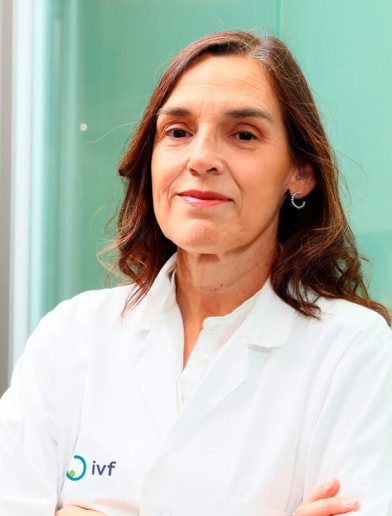
By Verónica Corona García (Gynaecologist – Reg. No. 280866947).

Before deciding to pursue embryo adoption, many patients have been on a long journey marked by uncertainty and, often, several disappointments following unsuccessful fertility treatments for a variety of reasons.
This may be due to a very low ovarian reserve, fertility issues affecting both partners or simply the inability to use their own gametes. At this stage, knowing that other options are available can open up a new opportunity to achieve pregnancy.
Embryo adoption, also known as embryo donation, involves transferring a previously created, cryopreserved embryo to a woman. The embryo was originally created during another assisted reproduction treatment.
The embryo comes from individuals who, having completed their own fertility journey, have consented to its donation for reproductive purposes so that another woman or couple can use it, as provided for under Spanish Law 14/2006 on assisted human reproduction. Although the term ‘embryo adoption’ is commonly used, the more accurate legal term is embryo or pre-embryo donation for reproductive purposes.
For some patients, this alternative also holds special meaning, as it brings together the generosity of a family who no longer intends to use their embryos and another person's desire to become a mother.
During in vitro fertilisation (IVF) treatment, several embryos may be created, although not all of them are transferred for various reasons. In such cases, they can be cryopreserved for future treatment attempts.
When a woman or couple has completed their family-building journey and decides not to use their remaining embryos, Spanish legislation allows for several options. These include keeping them for personal use, donating them for reproductive purposes, donating them to research or, under legally defined circumstances, ending their storage.
One of these options is to donate embryos to other individuals who wish to start or grow their families. At IVF-Life, embryos available for adoption come from patients who have fulfilled their wish to build a family and have decided to give other patients the opportunity to achieve pregnancy.
Those who donate their embryos relinquish the possibility of using them in their own family-building plans and consent to their transfer to another person. Meanwhile, recipients embrace the prospect of motherhood without contributing their own genetic material, whilst being fully involved in pregnancy, childbirth and raising their child.
For some women, offering an existing embryo the opportunity to develop holds particular ethical significance. For others, the main reasons for choosing this option are medical, financial or practical. What matters most, however, is that the decision is made after receiving sufficient medical, legal and emotional information, and that the patient feels comfortable with the implications of the treatment.
Another characteristic of embryo adoption is that, generally speaking, it tends to be less expensive than other treatments that involve creating new embryos, for technical reasons. Double donation treatment, for example, requires the selection and sourcing of donor eggs and sperm, fertilisation in the laboratory, embryo culture and the subsequent selection of the embryo to be transferred.
With embryo adoption, however, the embryo has already been created and cryopreserved. There is therefore no need for further ovarian stimulation of an egg donor, egg retrieval or the creation of a new cohort of embryos. The recipient must first undergo the appropriate medical assessment and prepare her endometrium for embryo transfer. The laboratory then warms the vitrified embryo and assesses its development before transferring it.
This does not mean that embryo adoption is always the best option for financial reasons. The decision should primarily be based on the medical prognosis, the availability of suitable embryos and the patient's preferences. Cost may form part of the decision-making process, but it should never be the sole consideration.
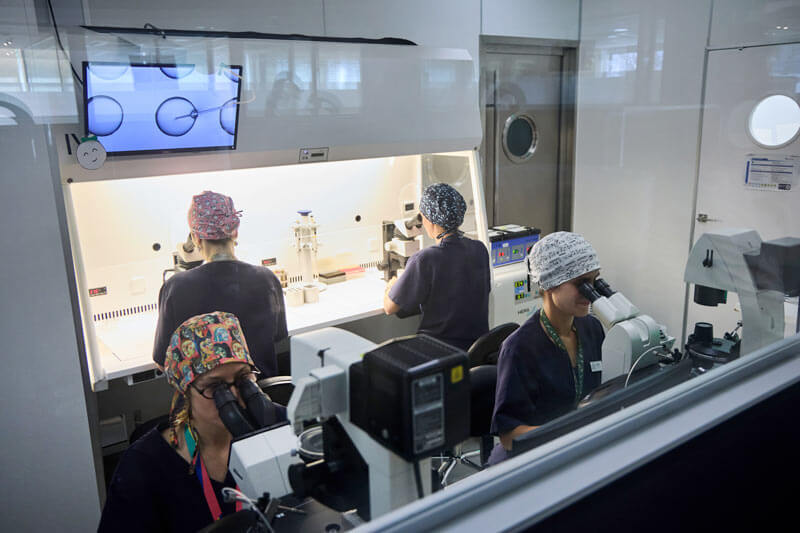
Spain has one of the most protective legal frameworks governing assisted reproduction and the use of cryopreserved embryos.
Spanish Law 14/2006 establishes that frozen pre-embryos may be donated for reproductive purposes, provided that the appropriate informed consent has been obtained. It also requires fertility clinics to maintain the confidentiality of information and regulates the legal implications of using donated gametes or embryos.
Embryo donation in Spain is subject to confidentiality requirements. Consequently, the recipient cannot know the identity of the individuals from whom the embryo originates, and the donor families will not know the identity of the person who ultimately receives it.
Fertility clinics must therefore safeguard information relating to the origin of gametes and embryos. Spanish law expressly establishes confidentiality and anonymity obligations regarding the handling of donated pre-embryos.
However, legislation provides for exceptional circumstances in which certain information may be disclosed, for example, when there is a serious medical need. The original text states that even under these circumstances, the donor's identity cannot be disclosed and no legal parent-child relationship can be established.
One of the concerns recipient families may have is whether the individuals who donated the embryos could subsequently claim any rights over the child. The answer is clear: no.
Spanish Law 14/2006 establishes that legal parentage is governed by civil law. Where formal consent has been given prior to fertilisation involving donor gametes, parentage cannot subsequently be challenged solely on the grounds that donated gametes were used.
Motherhood and, where applicable, the legal parentage of the recipient's partner are determined in accordance with the applicable legal framework and the consent provided before treatment.
From a medical perspective, embryo adoption may appear to be a relatively straightforward treatment. Emotionally, however, this is not always the case.
Accepting that the future child will not share a genetic connection with the woman carrying the pregnancy may require a period of adjustment, similar to that experienced in other fertility treatments involving donor gametes.
Feelings of sadness may arise, along with fears about not feeling that the baby is one's own, questions about physical resemblance or concerns about how to explain the child's origins in the future. All these questions form part of a decision that goes far beyond choosing a medical treatment.
During pregnancy, however, an active biological relationship develops between the mother and the developing baby. The embryo implants in her endometrium, the placenta develops through interaction with her body, and for nine months the mother provides the environment in which her baby receives oxygen and nutrients and completes its development.
We also know that the intrauterine environment can influence mechanisms associated with gene expression, a field known as epigenetics. However, this does not mean that the woman carrying the pregnancy contributes her DNA to the embryo or passes on her own genetic traits. Rather, it means that pregnancy is not a passive process, but a continuous biological interaction between the mother's body, the placenta and the foetus.45
From this point onwards, the family bond continues to develop through birth, caregiving, shared experiences and raising the child. Accepting the absence of a genetic connection does not mean that motherhood will feel any less personal or meaningful.
Find out more about the eligibility requirements and book your initial consultation:
No. When embryos are donated for reproductive purposes, consent is given for this specific use, and the legal parentage of a child born through assisted reproduction is determined in accordance with the legislation applicable to the recipient family.
Furthermore, Spanish Law 14/2006 establishes that, even in exceptional circumstances where a donor's identity may be disclosed, this has no legal effect on parentage. Therefore, the existence of a genetic connection does not establish a legal parental relationship.
Fertility clinics are required to maintain clinical records regarding the origin of gametes and embryos, ensuring their traceability and confidentiality. The information available may include medical details, relevant medical history, tests carried out and characteristics necessary for the appropriate management of treatment.
In the case of embryos originally created for a couple and subsequently donated, the genetic information available may depend on the tests performed at the time those embryos were created.
Jefatura del Estado.
Ley 14/2006 sobre técnicas de reproducción humana asistida.
.
2006;
19947-19956
Marco legal que regula las técnicas de reproducción humana asistida en España.:
https://www.boe.es/eli/es/l/2006/05/26/14/con
Jefatura del Estado.
Donantes y contratos de donación.
.
2006;
Artículo 5
Regula las condiciones, el anonimato y los requisitos legales de la donación de gametos y preembriones:
https://www.boe.es/buscar/act.php?id=BOE-A-2006-9292
Jefatura del Estado.
Filiación de los hijos nacidos mediante técnicas de reproducción humana asistida.
.
2006;
Artículos 7 y 8
Establece las disposiciones legales relativas a la filiación de los hijos nacidos mediante reproducción asistida:
https://www.boe.es/buscar/act.php?id=BOE-A-2006-9292
Crioconservación de gametos y preembriones.
.
2006;
Artículo 11
egula la conservación y los posibles destinos de los gametos y preembriones crioconservados:
https://www.boe.es/buscar/act.php?id=BOE-A-2006-9292
Practice Committee of the American Society for Reproductive Medicine (ASRM).
Gamete and embryo donation guidance.
.
2024;
122(5):799-813
Establece recomendaciones médicas, genéticas y psicológicas para la donación de gametos y embriones:
https://www.asrm.org/practice-guidance/practice-committee-documents/guidance-regarding-gamete-and-embryo-donation/
Practice Committee of the American Society for Reproductive Medicine (ASRM).
Gamete and embryo donation guidance – Psychoeducational counseling for recipients.
.
2024;
122(5):799-813
Recoge recomendaciones sobre el asesoramiento psicológico y emocional de los receptores de gametos y embriones donados:
https://www.asrm.org/practice-guidance/practice-committee-documents/guidance-regarding-gamete-and-embryo-donation/
European Society of Human Reproduction and Embryology (ESHRE).
Routine psychosocial care in infertility and medically assisted reproduction – A guide for fertility staff.
.
2015;
30(11):2476-2485
Ofrece recomendaciones para identificar y atender las necesidades psicosociales de los pacientes durante los tratamientos de fertilidad:
https://www.eshre.eu/Guidelines-and-Legal/Guidelines/Psychosocial-care-guideline
Jadva V, Imrie S.
Embryo donation: motivations, experiences, parenting, and child adjustment.
.
2023;
119(1):11-14
Revisa las motivaciones, experiencias familiares, parentalidad y adaptación psicológica de los hijos nacidos mediante donación de embriones:
https://pubmed.ncbi.nlm.nih.gov/36396495/
Privacy Policy
IVF-LIFE, hereby informs you of its privacy policy applied to personal data. The use of the website does not imply that the user must provide any information regarding their identity, and cannot be associated with a specific user by the company. In the event that personal data is provided, this data will be collected and used in accordance with the limitations and rights set out in the aforementioned regulation.
WHO IS RESPONSIBLE FOR THE PROCESSING OF YOUR DATA?
DATA CONTROLLER: IVF SPAIN ALICANTE S.L.U (hereinafter IVF-Life)
CIF: B-54973227
Postal Address: Avenida de Ansaldo, no. 13, 03540, Alicante (Alicante)
Contact with the Data Protection Officer: dpo@ivf-life-group.com
DATA CONTROLLER: Instituto Vasco de Fertilidad (hereinafter IVF-Life)
CIF: B95575874
Postal Address: Avenida de Tolosa, 71-73, 20018 Donostia / San Sebastián (Spain)
Contact with the Data Protection Officer: dpo@ivf-life-group.com
DATA CONTROLLER: IVF Spain Madrid (hereinafter IVF-Life)
CIF: B 85138113
Postal Address: C/ de Manuel de Falla, 6-8, 28036 Madrid (Spain)
Contact with the Data Protection Officer: dpo@ivf-life-group.com
WHAT TYPE OF DATA DO WE PROCESS?
Depending on the products, services, or functionalities that you wish to enjoy, we may need to process different types of data. In general, this data will be, depending on the case, the following:
- Your identification data: for example: name, surname, language, country from which you interact with us, contact details, etc.
- Connection, geolocation and navigation data.
- Commercial information if you are subscribed to our newsletter.
- Data about your tastes and preferences.
WHAT IS THE ORIGIN OF THE DATA?
The use of certain services or requests addressed to IVF-LIFE are subject to the prior completion of the corresponding form. All the information provided by the User through the forms on the Portal for the above purposes or any other must be truthful.
To this end, the User guarantees the authenticity of all the data provided and will keep the information provided to IVF-LIFE perfectly up to date so that it corresponds at all times to the User's real situation. In any case, the User will be solely responsible for any false or inaccurate statements made and for any damage caused to IVF-LIFE or third parties because of the information provided.
By clicking on the "send" button on the corresponding form, the User expressly consents to his/her data being used to send professional communications about his/her query by e-mail or by any other means.
However, the User may revoke the consent given and oppose the sending of such communications in each of the communications received or by sending them to the address indicated in this legal notice and enabled for this purpose. Likewise, in each of the communications sent, the procedure for opposing the sending of new professional communications shall be expressly indicated.
Users who provide personal data of other natural persons are obliged to comply, in relation to said data, with all obligations deriving from the data protection regulations in force, and in particular the duty to inform and obtain the consent of the owner of the personal data.
When we request your personal data to provide access to certain website functionalities, we will mark the required fields to ensure the service can be delivered.
Please note that if you choose not to provide us with this data, you may not be able to complete your registration as a user or you may not be able to enjoy those services or functionalities.
For the processing of data, IVF-LIFE adopts the security levels required by current European and national legislation on the Protection of Personal Data. Notwithstanding the above, technical security in a medium such as the Internet is not impregnable and there may be leaks due to the malicious actions of third parties.
Our services are aimed at people of legal age, in the event that some of our services are specifically aimed at minors, IVF-LIFE will request the consent of parents or guardians for the collection of personal data or, where appropriate, for the automated processing of data as set out in current legislation. If the User is a minor, they are required to have the prior consent of their parents or guardians before proceeding to the inclusion of their personal data in the forms on the Website.
Initially, your personal data are provided directly by you, but in certain cases they may originate from centres, referring doctors and public health systems with which there is collaboration.
FOR WHAT PURPOSES DO WE PROCESS YOUR PERSONAL DATA?
Depending on how you interact with our website, we will process your personal data for the following purposes:
To deal with requests or requests that you make through the different means incorporated into our website.
We only process the personal data that is strictly necessary to manage or resolve your request or application.
For marketing purposes
To the extent that you subscribe to our newsletter, your personal data will be used for the periodic sending of company newsletters.
You should remember that you can unsubscribe from the newsletter, at any time and free of charge, by contacting us via the e-mail address of the data controller or by following the instructions that we will provide you with in each of our communications.
For the management of social networks
If you follow us or contact us through the different social networks in which we are present, we will process the data that you provide to us through these for the sole purpose of responding to your messages or comments and managing our contact list.
Usability and quality analysis to improve our services (cookies).
If you access our platform, we inform you that we will process your browsing data for analytical and statistical purposes, i.e. to understand how users interact with our platform and thus be able to make improvements to it. Likewise, we sometimes carry out quality actions and surveys aimed at finding out the degree of satisfaction of our customers and users and detecting those areas in which we can improve.
WHAT IS THE LEGAL BASIS FOR PROCESSING YOUR DATA?
The legal basis that allows us to process your personal data also depends on the purpose for which we process them, so we will find different legal bases under the following purposes:
Attention to requests for information.
The legal basis for the processing of your data is the informed consent to respond to queries raised through the website, forms and other means provided, which implies the prior reading and acceptance of these conditions by the interested party.
Marketing
The legitimate basis for processing your data for marketing purposes is the consent you provide.
Social networking
The basis of legitimacy is the informed consent to respond to queries raised through the social network, as well as the time when you follow us and want to be part of our contact list.
Usability and quality analysis (cookies)
User consent to the use of cookies.
HOW LONG WILL WE KEEP YOUR DATA?
Request for information. We will process your data for as long as it is necessary to deal with your request or request and thereafter 1 year.
Marketing
We will process your data until you unsubscribe or cancel your subscription to the newsletter.
Social media
We will process your data for as long as it is necessary to deal with your request and for as long as you are a follower of our profile.
WILL WE SHARE YOUR DATA WITH THIRD PARTIES?
Personal data will not be transferred or communicated to third parties, except: legal obligation, we obtain your express consent, or we understand that there is a legitimate interest on our part, which will be duly communicated to you.
However, we inform you that we are present in the following social networks: Facebook, LinkedIn, Instagram and YouTube, to keep our followers informed regarding the company's news and services.
You can access these social networks voluntarily and through the links available on the website itself or by accessing directly and on your own from your browser or installed app.
You should know that this website is not responsible for the use of the data that these social networks may make. However, when these data are generated in the social network and derive from an interaction with our website, we will not be held responsible for the use of such data.
In order to consent to our transfer from this website and the processing of your data, you should carefully read the privacy policy of the social network you wish to access:
Facebook: Facebook Privacy Policy
Instagram: Instagram Privacy Policy
LinkedIn: Linkedin Privacy Policy
YouTube: Youtube Privacy Policy
Spotify: Spotify Privacy Policy
In this way, before clicking on the logos of the SS. RR. present on our website, you can inform yourself and make a redirection with prior knowledge of the processing of your data and on a voluntary basis.
Other technological services:
- WhatsApp: WhatsApp Privacy Policy
- Companies of the "IVF LIFE Group" on the legal basis of consent or legitimate interest: Instituto Vasco de Fertilidad S.L.U., with NIF B95575874 and address at Avda Tolosa, 71-73 Donostia (Gipuzkoa), and IVF Spain Madrid S.L., with NIF B85138113 and address at Calle Manuel de Falla, 6-8, 28036 Madrid.
WHAT ARE YOUR RIGHTS WHEN YOU PROVIDE US WITH YOUR DATA?
We undertake to respect the confidentiality of your personal data and to guarantee you the exercise of your rights.
You may exercise them free of charge by sending us an e-mail to our address above, simply by providing proof of identity, the reason for your request and the right you wish to exercise.
If we consider it necessary in order to identify you, we may ask you for a copy of a document proving your identity. In particular, regardless of the purpose or the legal basis on which we process your data, you have the right to:
Ask us for access to the data we hold about you.
Ask us to rectify the data we already hold about you. Please note that by actively providing us with your personal information in any way, you warrant that it is true and accurate and you undertake to notify us of any changes or modifications to it.
Ask us to delete your data to the extent that they are no longer necessary for the purpose for which we need to process them as we have previously informed you, or to the extent that we no longer have the legitimacy to do so.
Ask us to restrict the processing of your data, which means that in certain cases you may ask us to temporarily stop processing the data or to keep it longer than necessary when you may need it. If you have given us your consent to process your data for any purpose, you also have the right to withdraw your consent at any time.
To receive the personal data concerning you that you have provided to us in a structured, commonly used and machine-readable form and to transfer it to another data controller.
Moreover, where the processing of your data is based on our legitimate interest, you also have the right to object to the processing of your data.
Finally, we inform you of your right to lodge a complaint with the relevant data protection supervisory authority, with the Spanish Data Protection Agency.
CHANGES TO THE PRIVACY POLICY
We may change the information contained in this Privacy Policy from time to time. If we do so, we will notify you by various means through the Platform, or we will notify you at your email address when the change in question is significant to your privacy, so that you can review the changes, assess them and, where appropriate, object to or unsubscribe from any service or functionality.
INFORMATION ABOUT COOKIES
We use cookies and similar devices to facilitate your navigation on the Platform, to know how you interact with us and, in certain cases, to be able to show you advertising based on your browsing habits. Please read our Cookie Policy to learn more about the cookies and similar devices we use, their purpose and other information of interest.