By Nina Reshota (Licensed Physician No. 03-0314542).
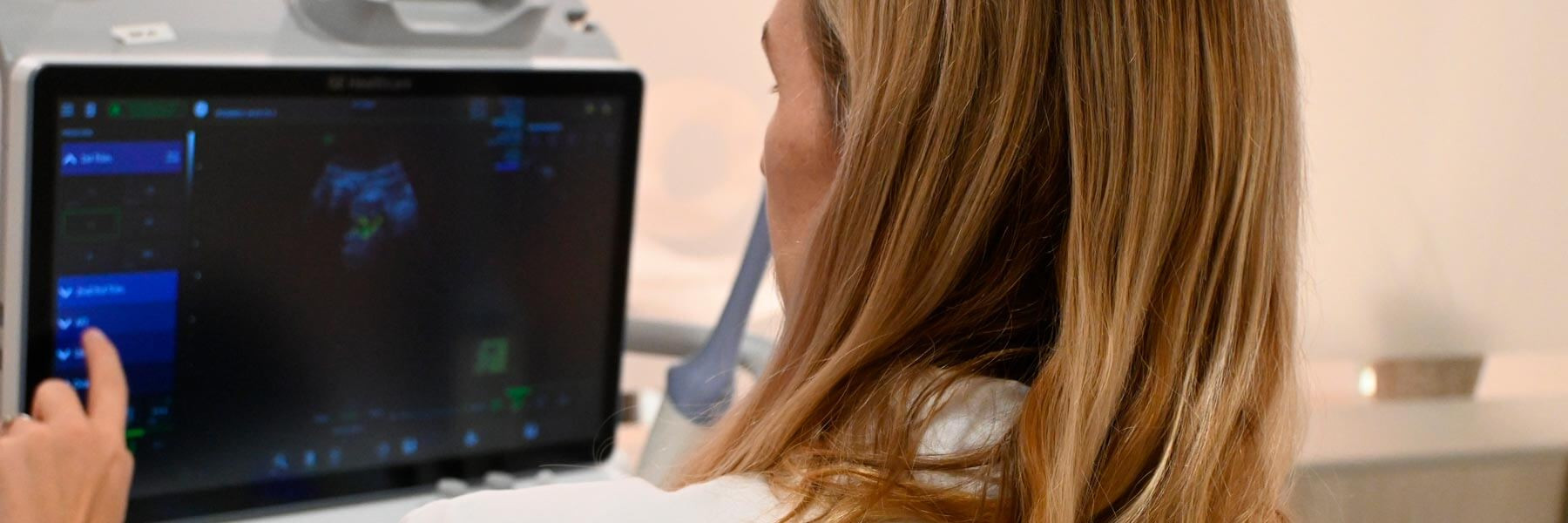
After an embryo transfer, many questions can arise, especially if it is your first time. One of the most common is whether rest is necessary to help the embryo implant. The answer is that complete bed rest is not necessary after an embryo transfer. As always in medicine, this is general guidance, and your medical team may give you different instructions if needed.
That said, it may be advisable to take things easy during the first 24–48 hours, particularly by avoiding significant physical exertion. This is not because the embryo needs you to rest to stay inside the uterus or to implant, but rather to support your well-being and allow your body to recover from treatment, especially if you still have discomfort from ovarian stimulation or egg retrieval.
There has long been a belief that it is better to lie down for a while after the transfer to prevent the embryo from becoming dislodged or moving within the uterus. But this is simply not the case. The uterus is not an open, empty cavity in which the embryo can move freely under the influence of gravity. The uterine walls lie very close together, and during the transfer the embryo is carefully placed inside the uterine cavity along with a small amount of culture medium.
For this reason, getting up, walking, going to the bathroom, sitting down, or changing position will not cause the embryo to become dislodged or fall out. Likewise, lying down does not help keep it in place. In fact, the American Society for Reproductive Medicine (ASRM) states that there is sufficient evidence not to recommend bed rest after embryo transfer and supports getting up and moving immediately after the procedure.
Relative rest does not mean staying in bed or on the sofa for several days. Rather, it means maintaining normal activity while temporarily avoiding activities that involve significant physical exertion.
It is also important to remember that recommendations may vary depending on the treatment circumstances. A frozen embryo transfer, where there has been no recent egg retrieval, is not the same as a transfer performed a few days after ovarian stimulation and egg retrieval, when the ovaries may still be enlarged and uncomfortable.
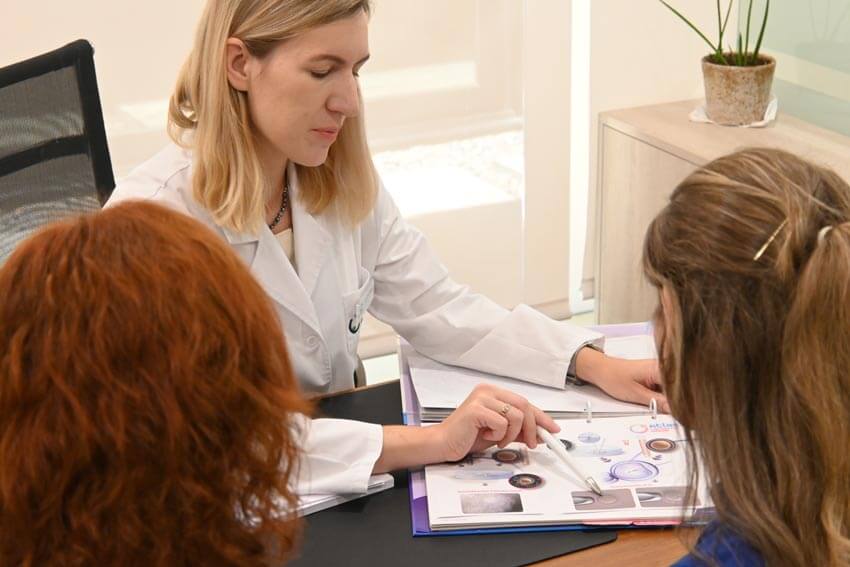
In the first few hours after the transfer, you can walk, shower, cook, leave the house, and carry out everyday activities that do not require significant physical effort. During this period, it is therefore advisable to keep your activity moderate and listen to your body, especially if you are still experiencing treatment-related discomfort.
It is also important to take any medication prescribed by your specialist correctly and not change or stop it without consulting your medical team first.
In most cases, you can return to work and resume your usual routine after an embryo transfer, provided your job does not involve excessive physical effort or heavy lifting. You can also go for walks, eat out, visit family or friends, and take part in social activities as normal.
Studies on this subject have not found that ordinary daily activity affects implantation, so there is no reason to think these activities could prevent the embryo from implanting.
Although complete bed rest is unnecessary, there are some precautions to bear in mind. During these days, it is best to use common sense and follow the specific guidance given by your medical team:
Although walking and staying active are not a problem, it is advisable to avoid very strenuous exercise, high-impact sports, lifting heavy weights, or activities that place significant strain on the abdomen. This is not because the embryo is at risk, but to allow your body to recover better after treatment.
Although there is no strong evidence that having sex after the transfer reduces the chances of success, it is important to avoid intercourse if you have bleeding, discomfort after egg retrieval, or any clinical circumstances that call for caution.
The same applies to baths and swimming. There is no evidence that bathing directly affects embryo implantation, but specific advice about swimming pools, the sea, or bathtubs may apply after certain treatment procedures. For this reason, you should follow your medical team's advice for your particular situation.
Of course, it is impossible to eliminate stress from our lives entirely. However, try to maintain your usual routines, get enough rest, and choose activities that help you cope with the wait for your treatment result.
It is also important to avoid prolonged exposure to very high temperatures, such as saunas, hot tubs, or excessively hot baths, to prevent your body temperature from rising too much.
The answer is clear: there is no evidence that resting after an embryo transfer increases the chances of pregnancy. In fact, the American Society for Reproductive Medicine (ASRM) considers there to be Grade A evidence against recommending bed rest after embryo transfer. Patients can get up and walk immediately after the procedure without harming their chances of implantation.
The European Society of Human Reproduction and Embryology (ESHRE) also supports this view. Its educational materials on embryo transfer explain that the available evidence does not justify keeping patients at rest after the procedure and that they can get up and move immediately.
Discover how we care for every stage of the procedure in our step-by-step in vitro fertilization protocol.
In vitro fertilisation step by step
Therefore, the success of an embryo transfer does not depend on remaining still for hours or days afterward. Implantation involves many factors related to the embryo itself, the endometrium, and the specific characteristics of each treatment.
In principle, traveling by car, train, or plane does not affect embryo implantation. However, on long journeys, it is advisable to get up regularly, move your legs, stay well hydrated, and follow general advice to avoid remaining immobile for many hours.
Nevertheless, if there are complications after treatment, a risk of ovarian hyperstimulation syndrome, or another specific medical concern, your specialist may recommend postponing your trip.
No. Bending down, getting up from a chair, or going up and down stairs normally will not cause the embryo to become dislodged. The recommendation is to avoid excessive physical exertion, not everyday movements. If you need to climb stairs, walk to work, or bend down to pick something up, you can do so as usual.
In short, after an embryo transfer, you do not need to worry about every movement. Instead, try to lead as normal a life as possible and return to your daily routine, using common sense and postponing tasks that require greater physical effort.
Every treatment is different, however, and if there is a reason to limit your activity, your specialist will explain for how long and why.
Practice Committee of the American Society for Reproductive Medicine.
Performing the embryo transfer: a guideline.
.
2017;
882–896
Guía clínica sobre las buenas prácticas durante la transferencia embrionaria:
https://www.asrm.org/practice-guidance/practice-committee-documents/performing-the-embryo-transfer-a-guideline-2017/
European Society of Human Reproduction and Embryology.
Embryo Transfer – Educational Material: Bed Rest vs. Ambulation Immediately After Embryo Transfer.
.
2018;
67
Material educativo de ESHRE que examina la evidencia científica sobre el reposo en cama frente a la movilización inmediata después de la transferencia embrionaria:
https://www.eshre.eu/Books/ESHRE2018/PCC14/files/basic-html/page67.html
Cozzolino M, Troiano G, Esencan E.
Bed rest after an embryo transfer: a systematic review and meta-analysis.
.
2019;
1121–1130
Revisión sistemática y metaanálisis que evalúa la influencia del reposo en cama después de la transferencia embrionaria sobre los resultados reproductivos:
https://pubmed.ncbi.nlm.nih.gov/31520259/
Rodriguez-Purata J, Alonso-de Mendieta M, Gomez-Cuesta MJ, Cervantes-Bravo E.
Live Birth Rate Following Bed Rest Versus Early Mobilization After Embryo Transfer: A Systematic Review And Meta-Analysis.
.
2022;
547–553
Revisión sistemática y metaanálisis que compara las tasas de nacido vivo entre pacientes que permanecen en reposo después de la transferencia embrionaria y aquellas que retoman la movilidad de forma temprana:
https://pubmed.ncbi.nlm.nih.gov/35621274/
Ata B.
Interventions to optimize embryo transfer in women undergoing assisted conception: a comprehensive systematic review and meta-analyses.
.
2022;
Revisión sistemática que analiza diferentes intervenciones destinadas a optimizar los resultados de la transferencia embrionaria en tratamientos de reproducción asistida:
https://pubmed.ncbi.nlm.nih.gov/35325124/
Zemet R, Orvieto R, Watad H.
The association between level of physical activity and pregnancy rate after embryo transfer: a prospective study.
.
2021;
930–937
Estudio prospectivo que investiga la relación entre el nivel de actividad física después de la transferencia embrionaria y las tasas de embarazo:
https://pubmed.ncbi.nlm.nih.gov/33832865/
Hou JW, Yuan LH, Cao XL.
Impact of sexual intercourse on frozen-thawed embryo transfer outcomes: a randomized controlled trial.
.
2026;
Artículo 19
Ensayo clínico aleatorizado que evalúa la influencia de las relaciones sexuales sobre los resultados reproductivos en ciclos de transferencia de embriones criopreservados:
https://pubmed.ncbi.nlm.nih.gov/36859338/
Dias Jr JA, Izzo CR, Fassolas G, Henrique LF, Wajman DS.
Does flying after embryo transfer impact implantation?.
.
2025;
424–429
Estudio que analiza si viajar en avión después de una transferencia embrionaria puede influir en la implantación del embrión y en los resultados del tratamiento:
https://pubmed.ncbi.nlm.nih.gov/40440475/
Privacy Policy
IVF-LIFE, hereby informs you of its privacy policy applied to personal data. The use of the website does not imply that the user must provide any information regarding their identity, and cannot be associated with a specific user by the company. In the event that personal data is provided, this data will be collected and used in accordance with the limitations and rights set out in the aforementioned regulation.
WHO IS RESPONSIBLE FOR THE PROCESSING OF YOUR DATA?
DATA CONTROLLER: IVF SPAIN ALICANTE S.L.U (hereinafter IVF-Life)
CIF: B-54973227
Postal Address: Avenida de Ansaldo, no. 13, 03540, Alicante (Alicante)
Contact with the Data Protection Officer: dpo@ivf-life-group.com
DATA CONTROLLER: Instituto Vasco de Fertilidad (hereinafter IVF-Life)
CIF: B95575874
Postal Address: Avenida de Tolosa, 71-73, 20018 Donostia / San Sebastián (Spain)
Contact with the Data Protection Officer: dpo@ivf-life-group.com
DATA CONTROLLER: IVF Spain Madrid (hereinafter IVF-Life)
CIF: B 85138113
Postal Address: C/ de Manuel de Falla, 6-8, 28036 Madrid (Spain)
Contact with the Data Protection Officer: dpo@ivf-life-group.com
WHAT TYPE OF DATA DO WE PROCESS?
Depending on the products, services, or functionalities that you wish to enjoy, we may need to process different types of data. In general, this data will be, depending on the case, the following:
- Your identification data: for example: name, surname, language, country from which you interact with us, contact details, etc.
- Connection, geolocation and navigation data.
- Commercial information if you are subscribed to our newsletter.
- Data about your tastes and preferences.
WHAT IS THE ORIGIN OF THE DATA?
The use of certain services or requests addressed to IVF-LIFE are subject to the prior completion of the corresponding form. All the information provided by the User through the forms on the Portal for the above purposes or any other must be truthful.
To this end, the User guarantees the authenticity of all the data provided and will keep the information provided to IVF-LIFE perfectly up to date so that it corresponds at all times to the User's real situation. In any case, the User will be solely responsible for any false or inaccurate statements made and for any damage caused to IVF-LIFE or third parties because of the information provided.
By clicking on the "send" button on the corresponding form, the User expressly consents to his/her data being used to send professional communications about his/her query by e-mail or by any other means.
However, the User may revoke the consent given and oppose the sending of such communications in each of the communications received or by sending them to the address indicated in this legal notice and enabled for this purpose. Likewise, in each of the communications sent, the procedure for opposing the sending of new professional communications shall be expressly indicated.
Users who provide personal data of other natural persons are obliged to comply, in relation to said data, with all obligations deriving from the data protection regulations in force, and in particular the duty to inform and obtain the consent of the owner of the personal data.
When we request your personal data to provide access to certain website functionalities, we will mark the required fields to ensure the service can be delivered.
Please note that if you choose not to provide us with this data, you may not be able to complete your registration as a user or you may not be able to enjoy those services or functionalities.
For the processing of data, IVF-LIFE adopts the security levels required by current European and national legislation on the Protection of Personal Data. Notwithstanding the above, technical security in a medium such as the Internet is not impregnable and there may be leaks due to the malicious actions of third parties.
Our services are aimed at people of legal age, in the event that some of our services are specifically aimed at minors, IVF-LIFE will request the consent of parents or guardians for the collection of personal data or, where appropriate, for the automated processing of data as set out in current legislation. If the User is a minor, they are required to have the prior consent of their parents or guardians before proceeding to the inclusion of their personal data in the forms on the Website.
Initially, your personal data are provided directly by you, but in certain cases they may originate from centres, referring doctors and public health systems with which there is collaboration.
FOR WHAT PURPOSES DO WE PROCESS YOUR PERSONAL DATA?
Depending on how you interact with our website, we will process your personal data for the following purposes:
To deal with requests or requests that you make through the different means incorporated into our website.
We only process the personal data that is strictly necessary to manage or resolve your request or application.
For marketing purposes
To the extent that you subscribe to our newsletter, your personal data will be used for the periodic sending of company newsletters.
You should remember that you can unsubscribe from the newsletter, at any time and free of charge, by contacting us via the e-mail address of the data controller or by following the instructions that we will provide you with in each of our communications.
For the management of social networks
If you follow us or contact us through the different social networks in which we are present, we will process the data that you provide to us through these for the sole purpose of responding to your messages or comments and managing our contact list.
Usability and quality analysis to improve our services (cookies).
If you access our platform, we inform you that we will process your browsing data for analytical and statistical purposes, i.e. to understand how users interact with our platform and thus be able to make improvements to it. Likewise, we sometimes carry out quality actions and surveys aimed at finding out the degree of satisfaction of our customers and users and detecting those areas in which we can improve.
WHAT IS THE LEGAL BASIS FOR PROCESSING YOUR DATA?
The legal basis that allows us to process your personal data also depends on the purpose for which we process them, so we will find different legal bases under the following purposes:
Attention to requests for information.
The legal basis for the processing of your data is the informed consent to respond to queries raised through the website, forms and other means provided, which implies the prior reading and acceptance of these conditions by the interested party.
Marketing
The legitimate basis for processing your data for marketing purposes is the consent you provide.
Social networking
The basis of legitimacy is the informed consent to respond to queries raised through the social network, as well as the time when you follow us and want to be part of our contact list.
Usability and quality analysis (cookies)
User consent to the use of cookies.
HOW LONG WILL WE KEEP YOUR DATA?
Request for information. We will process your data for as long as it is necessary to deal with your request or request and thereafter 1 year.
Marketing
We will process your data until you unsubscribe or cancel your subscription to the newsletter.
Social media
We will process your data for as long as it is necessary to deal with your request and for as long as you are a follower of our profile.
WILL WE SHARE YOUR DATA WITH THIRD PARTIES?
Personal data will not be transferred or communicated to third parties, except: legal obligation, we obtain your express consent, or we understand that there is a legitimate interest on our part, which will be duly communicated to you.
However, we inform you that we are present in the following social networks: Facebook, LinkedIn, Instagram and YouTube, to keep our followers informed regarding the company's news and services.
You can access these social networks voluntarily and through the links available on the website itself or by accessing directly and on your own from your browser or installed app.
You should know that this website is not responsible for the use of the data that these social networks may make. However, when these data are generated in the social network and derive from an interaction with our website, we will not be held responsible for the use of such data.
In order to consent to our transfer from this website and the processing of your data, you should carefully read the privacy policy of the social network you wish to access:
Facebook: Facebook Privacy Policy
Instagram: Instagram Privacy Policy
LinkedIn: Linkedin Privacy Policy
YouTube: Youtube Privacy Policy
Spotify: Spotify Privacy Policy
In this way, before clicking on the logos of the SS. RR. present on our website, you can inform yourself and make a redirection with prior knowledge of the processing of your data and on a voluntary basis.
Other technological services:
- WhatsApp: WhatsApp Privacy Policy
- Companies of the "IVF LIFE Group" on the legal basis of consent or legitimate interest: Instituto Vasco de Fertilidad S.L.U., with NIF B95575874 and address at Avda Tolosa, 71-73 Donostia (Gipuzkoa), and IVF Spain Madrid S.L., with NIF B85138113 and address at Calle Manuel de Falla, 6-8, 28036 Madrid.
WHAT ARE YOUR RIGHTS WHEN YOU PROVIDE US WITH YOUR DATA?
We undertake to respect the confidentiality of your personal data and to guarantee you the exercise of your rights.
You may exercise them free of charge by sending us an e-mail to our address above, simply by providing proof of identity, the reason for your request and the right you wish to exercise.
If we consider it necessary in order to identify you, we may ask you for a copy of a document proving your identity. In particular, regardless of the purpose or the legal basis on which we process your data, you have the right to:
Ask us for access to the data we hold about you.
Ask us to rectify the data we already hold about you. Please note that by actively providing us with your personal information in any way, you warrant that it is true and accurate and you undertake to notify us of any changes or modifications to it.
Ask us to delete your data to the extent that they are no longer necessary for the purpose for which we need to process them as we have previously informed you, or to the extent that we no longer have the legitimacy to do so.
Ask us to restrict the processing of your data, which means that in certain cases you may ask us to temporarily stop processing the data or to keep it longer than necessary when you may need it. If you have given us your consent to process your data for any purpose, you also have the right to withdraw your consent at any time.
To receive the personal data concerning you that you have provided to us in a structured, commonly used and machine-readable form and to transfer it to another data controller.
Moreover, where the processing of your data is based on our legitimate interest, you also have the right to object to the processing of your data.
Finally, we inform you of your right to lodge a complaint with the relevant data protection supervisory authority, with the Spanish Data Protection Agency.
CHANGES TO THE PRIVACY POLICY
We may change the information contained in this Privacy Policy from time to time. If we do so, we will notify you by various means through the Platform, or we will notify you at your email address when the change in question is significant to your privacy, so that you can review the changes, assess them and, where appropriate, object to or unsubscribe from any service or functionality.
INFORMATION ABOUT COOKIES
We use cookies and similar devices to facilitate your navigation on the Platform, to know how you interact with us and, in certain cases, to be able to show you advertising based on your browsing habits. Please read our Cookie Policy to learn more about the cookies and similar devices we use, their purpose and other information of interest.