By Dr Rut Gómez de Segura (Gynaecologist – Reg. No. 28/2908776).

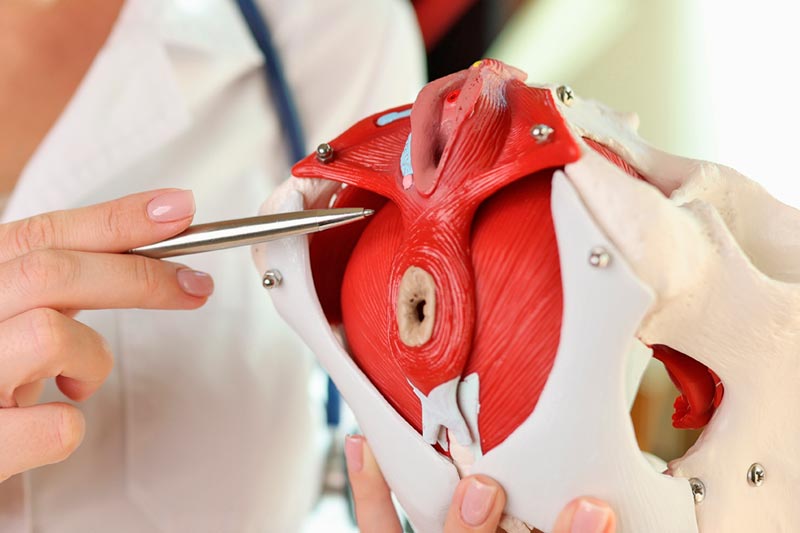
The pelvic floor is the set of muscles and fascial tissue found in the lower part of the pelvis and supports the pelvic visceral organs, anal canal, vagina and urethra. Therefore, it plays a key role in urination, defecation, sexual relations and is part of the birth canal.
Physiotherapists call it the pelvic diaphragm or perineum since it is not a flat, rigid floor but a set of muscles and ligaments in the shape of a vault that supports the viscera.
To find out more about this topic, that is relatively unknown to a large part of our society, we have interviewed Maria Carmen Carrillo Leal. She is a specialised physiotherapist in pelviperineology (pelvic floor rehabilitation) and director of the CIFIP, the first centre in Alicante (Spain) that is specialised in pelvi-perineal rehabilitation.
The pathologies related to the pelvic floor can be divided into two main groups. On the one hand, all those related to the weakness of the pelvic floor muscles, such as:
On the other hand, those that are related to the excessive tone of the perineal musculature. The perineum, like any other muscle in the body, can contract. These contractions can cause pain during sexual relations, pain from sitting on the coccyx or pain from abdominal scars (caesarean section) or perineal scars (episiotomy). The appearance of any symptom is an alarm signal that a woman should visit a specialist, no matter how minor the issues seem.
Every day there are more women who go to the physiotherapist to solve their pelvic floor problems. Thanks to a change in mentality due to cultural growth, access to information and their wish to be healthy, more and more women turn to their physiotherapist to solve their pelvic floor problems. They are nonconformist women who seek to improve the quality of their life.
The quality of life of these patients gets worse. Many women avoid certain exercises because of the fear of urinary incontinence. Others avoid drinking liquids when they leave the house or find the exact location of public toilets on their route.
In those cases where pain affects sexual relations, the symptoms might also affect the relationship with the partner. Or when abdominal diastasis occurs, the belly does not regain its shape and firmness. The woman feels like her body is not what it used to be, which can lead to insecurity.
In my experience, I can say that all the women that come to my consult have one thing in common: they have a nonconformist mentality. I love it when I ask them about their objectives for coming to pelvic floor rehabilitation and they respond: “I want to be myself again and feel good”.
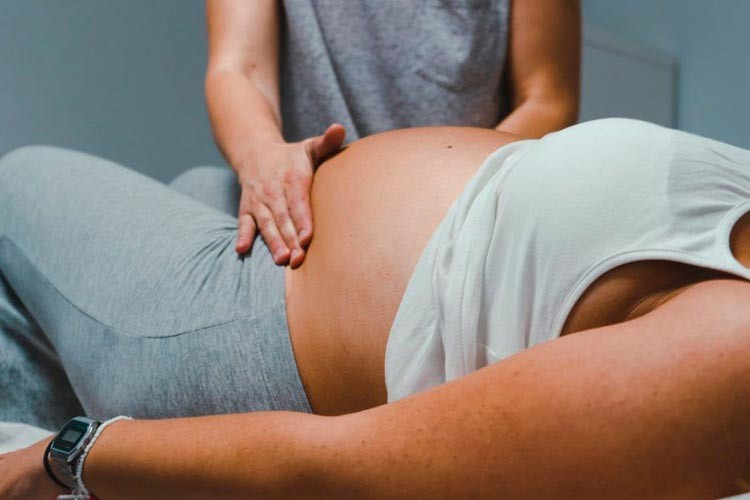
The pregnancy is the perfect moment to prevent all possible pelvic floor dysfunctions. Ideally, a pelvic-abdominal assessment by a physiotherapist should be performed after the first trimester. From that moment on, if any dysfunction is found, work will be done to maintain the body’s well-being and to avoid urinary incontinence, diastasis, pains such as sciatica, low back pain or costal pain. If everything is satisfactory in this assessment, it is recommended to do exercises adapted to the pregnancy.
After giving birth, the focus is re-education. This means that if the mother doesn’t have urine leakage, scar pain or pain during sexual intercourse, a plan can be made to recover the abdominal and perineal muscle.
If one of these alarm signals appears, rehabilitation should be carried out.
Every person should be able to execute any type of exercise, because exercising is healthy. The key is to know how to do this exercise. There are sports that are less harmful, such as hypopressive exercises, which are highly recommended during postpartum.
There are other exercises that are considered impact exercises, such as running or weight lifting. From my point of view, the importance lies in whether the exercise is done in a hyperpressive and therefore harmful way. The best way to work is to work on the abdominal-pelvic synergy. Thus, in addition to training, it also helps to strengthen the perineal muscle.
I recommend carrying out an individual assessment by a physiotherapist to check the correct functioning of the pelvic floor and the transverse of the abdomen.
The abdominal-pelvic synergy is the involuntary contraction of the deep musculature, pelvic floor and deep transverse abdomen. Before coughing, sneezing or jumping, this musculature contracts. There are three population groups that can lose this synergy: people with lower back pain, abdominal surgeries and pregnant women.
Therefore, it is essential to re-educate this synergy before the woman returns to high-intensity sports. In the classes that we offer in our centre, this is our objective.
Are the use of materials to strengthen the pelvic floor (Chinese balls) as well as the well-known Kegel exercises recommended for all cases?
In physiotherapy we avoid working with generalities and universal rules. As we have already mentioned, the ideal is to make an individual assessment and see if the use of Chinese balls is appropriate for a particular patient.
A simple example: a woman who wears a Chinese ball and drops it should not use the device without first undergoing rehabilitation. Similarly, in cases where there is pelvic pain, pubococcygeus muscle contraction exercises (Kegel exercises) would be contraindicated and a professional should be consulted.
A change of mentality is undoubtedly taking place in today's society with regard to pelvic floor treatment. Cultural growth, access to information and the quest for physical well-being have a great influence on this change. The patients who come to my practice have very different profiles, both in terms of their mentality and the physical symptoms they report.
I am grateful for this question and I hope to read this interview in a few years’ time and see that the answer is a reality. In my opinion, there should be specialised centres for pelvic floors where anyone, man or woman, can go to consult their doubts or symptoms and where they are attended from a multidisciplinary approach. Health professionals complement each other, and the patient benefits from the joint vision and the teamwork.
Above all, I firmly believe that health professionals accompany the patient when the symptoms appear, but it is the patient herself that should make the decision to start the process towards getting better and to make her own decisions.
Bo K., Frawley HC., Haylen BT., Abramov Y., Almeida FG., Berghmans B.
An International Urogynecological Association / International Continence Society joint report on the terminology for the conservative and nonpharmacological management of female pelvic floor dysfunction.
International Urogynecological Association (IUGA) / International Continence Society (ICS).
2017;
191-213
Report on terminology and conservative management of the female pelvic floor:
https://doi.org/10.1007/s00192-016-3123-4
Dumoulin C., Cacciari LP., Hay-Smith EJC.
Pelvic floor muscle training versus no treatment, or inactive control treatments, for urinary incontinence in women.
Cochrane Database of Systematic Reviews.
2018;
CD005654
Review on pelvic floor training and female urinary incontinence:
https://doi.org/10.1002/14651858.CD005654.pub4
Woodley SJ., Lawrenson P., Boyle R., Cody JD., Mørkved S., Kernohan A.
Pelvic floor muscle training for preventing and treating urinary and faecal incontinence in antenatal and postnatal women.
Cochrane Database of Systematic Reviews.
2020;
CD007471
Review of pelvic floor training during pregnancy and postpartum:
https://doi.org/10.1002/14651858.CD007471.pub4
Mørkved S., Bø K.
Effect of pelvic floor muscle training during pregnancy and after childbirth on prevention and treatment of urinary incontinence: a systematic review.
British Journal of Sports Medicine.
2014;
299-310
Review of pelvic floor exercises during pregnancy and postpartum:
https://doi.org/10.1136/bjsports-2012-091758
Privacy Policy
IVF-LIFE, hereby informs you of its privacy policy applied to personal data. The use of the website does not imply that the user must provide any information regarding their identity, and cannot be associated with a specific user by the company. In the event that personal data is provided, this data will be collected and used in accordance with the limitations and rights set out in the aforementioned regulation.
WHO IS RESPONSIBLE FOR THE PROCESSING OF YOUR DATA?
DATA CONTROLLER: IVF SPAIN ALICANTE S.L.U (hereinafter IVF-Life)
CIF: B-54973227
Postal Address: Avenida de Ansaldo, no. 13, 03540, Alicante (Alicante)
Contact with the Data Protection Officer: dpo@ivf-life-group.com
DATA CONTROLLER: Instituto Vasco de Fertilidad (hereinafter IVF-Life)
CIF: B95575874
Postal Address: Avenida de Tolosa, 71-73, 20018 Donostia / San Sebastián (Spain)
Contact with the Data Protection Officer: dpo@ivf-life-group.com
DATA CONTROLLER: IVF Spain Madrid (hereinafter IVF-Life)
CIF: B 85138113
Postal Address: C/ de Manuel de Falla, 6-8, 28036 Madrid (Spain)
Contact with the Data Protection Officer: dpo@ivf-life-group.com
WHAT TYPE OF DATA DO WE PROCESS?
Depending on the products, services, or functionalities that you wish to enjoy, we may need to process different types of data. In general, this data will be, depending on the case, the following:
- Your identification data: for example: name, surname, language, country from which you interact with us, contact details, etc.
- Connection, geolocation and navigation data.
- Commercial information if you are subscribed to our newsletter.
- Data about your tastes and preferences.
WHAT IS THE ORIGIN OF THE DATA?
The use of certain services or requests addressed to IVF-LIFE are subject to the prior completion of the corresponding form. All the information provided by the User through the forms on the Portal for the above purposes or any other must be truthful.
To this end, the User guarantees the authenticity of all the data provided and will keep the information provided to IVF-LIFE perfectly up to date so that it corresponds at all times to the User's real situation. In any case, the User will be solely responsible for any false or inaccurate statements made and for any damage caused to IVF-LIFE or third parties because of the information provided.
By clicking on the "send" button on the corresponding form, the User expressly consents to his/her data being used to send professional communications about his/her query by e-mail or by any other means.
However, the User may revoke the consent given and oppose the sending of such communications in each of the communications received or by sending them to the address indicated in this legal notice and enabled for this purpose. Likewise, in each of the communications sent, the procedure for opposing the sending of new professional communications shall be expressly indicated.
Users who provide personal data of other natural persons are obliged to comply, in relation to said data, with all obligations deriving from the data protection regulations in force, and in particular the duty to inform and obtain the consent of the owner of the personal data.
When we request your personal data to provide access to certain website functionalities, we will mark the required fields to ensure the service can be delivered.
Please note that if you choose not to provide us with this data, you may not be able to complete your registration as a user or you may not be able to enjoy those services or functionalities.
For the processing of data, IVF-LIFE adopts the security levels required by current European and national legislation on the Protection of Personal Data. Notwithstanding the above, technical security in a medium such as the Internet is not impregnable and there may be leaks due to the malicious actions of third parties.
Our services are aimed at people of legal age, in the event that some of our services are specifically aimed at minors, IVF-LIFE will request the consent of parents or guardians for the collection of personal data or, where appropriate, for the automated processing of data as set out in current legislation. If the User is a minor, they are required to have the prior consent of their parents or guardians before proceeding to the inclusion of their personal data in the forms on the Website.
Initially, your personal data are provided directly by you, but in certain cases they may originate from centres, referring doctors and public health systems with which there is collaboration.
FOR WHAT PURPOSES DO WE PROCESS YOUR PERSONAL DATA?
Depending on how you interact with our website, we will process your personal data for the following purposes:
To deal with requests or requests that you make through the different means incorporated into our website.
We only process the personal data that is strictly necessary to manage or resolve your request or application.
For marketing purposes
To the extent that you subscribe to our newsletter, your personal data will be used for the periodic sending of company newsletters.
You should remember that you can unsubscribe from the newsletter, at any time and free of charge, by contacting us via the e-mail address of the data controller or by following the instructions that we will provide you with in each of our communications.
For the management of social networks
If you follow us or contact us through the different social networks in which we are present, we will process the data that you provide to us through these for the sole purpose of responding to your messages or comments and managing our contact list.
Usability and quality analysis to improve our services (cookies).
If you access our platform, we inform you that we will process your browsing data for analytical and statistical purposes, i.e. to understand how users interact with our platform and thus be able to make improvements to it. Likewise, we sometimes carry out quality actions and surveys aimed at finding out the degree of satisfaction of our customers and users and detecting those areas in which we can improve.
WHAT IS THE LEGAL BASIS FOR PROCESSING YOUR DATA?
The legal basis that allows us to process your personal data also depends on the purpose for which we process them, so we will find different legal bases under the following purposes:
Attention to requests for information.
The legal basis for the processing of your data is the informed consent to respond to queries raised through the website, forms and other means provided, which implies the prior reading and acceptance of these conditions by the interested party.
Marketing
The legitimate basis for processing your data for marketing purposes is the consent you provide.
Social networking
The basis of legitimacy is the informed consent to respond to queries raised through the social network, as well as the time when you follow us and want to be part of our contact list.
Usability and quality analysis (cookies)
User consent to the use of cookies.
HOW LONG WILL WE KEEP YOUR DATA?
Request for information. We will process your data for as long as it is necessary to deal with your request or request and thereafter 1 year.
Marketing
We will process your data until you unsubscribe or cancel your subscription to the newsletter.
Social media
We will process your data for as long as it is necessary to deal with your request and for as long as you are a follower of our profile.
WILL WE SHARE YOUR DATA WITH THIRD PARTIES?
Personal data will not be transferred or communicated to third parties, except: legal obligation, we obtain your express consent, or we understand that there is a legitimate interest on our part, which will be duly communicated to you.
However, we inform you that we are present in the following social networks: Facebook, LinkedIn, Instagram and YouTube, to keep our followers informed regarding the company's news and services.
You can access these social networks voluntarily and through the links available on the website itself or by accessing directly and on your own from your browser or installed app.
You should know that this website is not responsible for the use of the data that these social networks may make. However, when these data are generated in the social network and derive from an interaction with our website, we will not be held responsible for the use of such data.
In order to consent to our transfer from this website and the processing of your data, you should carefully read the privacy policy of the social network you wish to access:
Facebook: Facebook Privacy Policy
Instagram: Instagram Privacy Policy
LinkedIn: Linkedin Privacy Policy
YouTube: Youtube Privacy Policy
Spotify: Spotify Privacy Policy
In this way, before clicking on the logos of the SS. RR. present on our website, you can inform yourself and make a redirection with prior knowledge of the processing of your data and on a voluntary basis.
Other technological services:
- WhatsApp: WhatsApp Privacy Policy
- Companies of the "IVF LIFE Group" on the legal basis of consent or legitimate interest: Instituto Vasco de Fertilidad S.L.U., with NIF B95575874 and address at Avda Tolosa, 71-73 Donostia (Gipuzkoa), and IVF Spain Madrid S.L., with NIF B85138113 and address at Calle Manuel de Falla, 6-8, 28036 Madrid.
WHAT ARE YOUR RIGHTS WHEN YOU PROVIDE US WITH YOUR DATA?
We undertake to respect the confidentiality of your personal data and to guarantee you the exercise of your rights.
You may exercise them free of charge by sending us an e-mail to our address above, simply by providing proof of identity, the reason for your request and the right you wish to exercise.
If we consider it necessary in order to identify you, we may ask you for a copy of a document proving your identity. In particular, regardless of the purpose or the legal basis on which we process your data, you have the right to:
Ask us for access to the data we hold about you.
Ask us to rectify the data we already hold about you. Please note that by actively providing us with your personal information in any way, you warrant that it is true and accurate and you undertake to notify us of any changes or modifications to it.
Ask us to delete your data to the extent that they are no longer necessary for the purpose for which we need to process them as we have previously informed you, or to the extent that we no longer have the legitimacy to do so.
Ask us to restrict the processing of your data, which means that in certain cases you may ask us to temporarily stop processing the data or to keep it longer than necessary when you may need it. If you have given us your consent to process your data for any purpose, you also have the right to withdraw your consent at any time.
To receive the personal data concerning you that you have provided to us in a structured, commonly used and machine-readable form and to transfer it to another data controller.
Moreover, where the processing of your data is based on our legitimate interest, you also have the right to object to the processing of your data.
Finally, we inform you of your right to lodge a complaint with the relevant data protection supervisory authority, with the Spanish Data Protection Agency.
CHANGES TO THE PRIVACY POLICY
We may change the information contained in this Privacy Policy from time to time. If we do so, we will notify you by various means through the Platform, or we will notify you at your email address when the change in question is significant to your privacy, so that you can review the changes, assess them and, where appropriate, object to or unsubscribe from any service or functionality.
INFORMATION ABOUT COOKIES
We use cookies and similar devices to facilitate your navigation on the Platform, to know how you interact with us and, in certain cases, to be able to show you advertising based on your browsing habits. Please read our Cookie Policy to learn more about the cookies and similar devices we use, their purpose and other information of interest.